On June 25, a traveling design fair that has staged shows inside a Monaco clifftop villa, a 15th-century Venice palazzo, a Capri monastery, and a decommissioned airport terminal in Abu Dhabi opened its first American edition in a field off Water Mill Towd Road. Less than a month later, the same ten-acre campus ran the summer benefit it has hosted every July for decades. Robert Wilson, the artist and theater director who built the place by hand starting in 1992, was not there for either one. He died in July 2025 at 83, and this was the first full season the Watermill Center has run its calendar without him.
That timing is the thing worth sitting with if you live here. Water Mill spent a summer holding an international art fair, a museum's yearlong national anniversary program, and the familiar rhythms of a farm-stand economy, all within about two miles of Montauk Highway. None of it required the others to notice.
The Stop Nobody Expected
NOMAD doesn't do convention centers. Since founder Nicolas Bellavance-Lecompte launched it in 2017 at Villa La Vigie, the Monte Carlo house where Karl Lagerfeld once summered for ten years running, the fair has moved to a St. Moritz clinic, a Venice palazzo, a Capri monastery, and last November a decommissioned terminal at Abu Dhabi's Zayed International Airport. It had never staged a U.S. edition. This June it chose the Watermill Center.
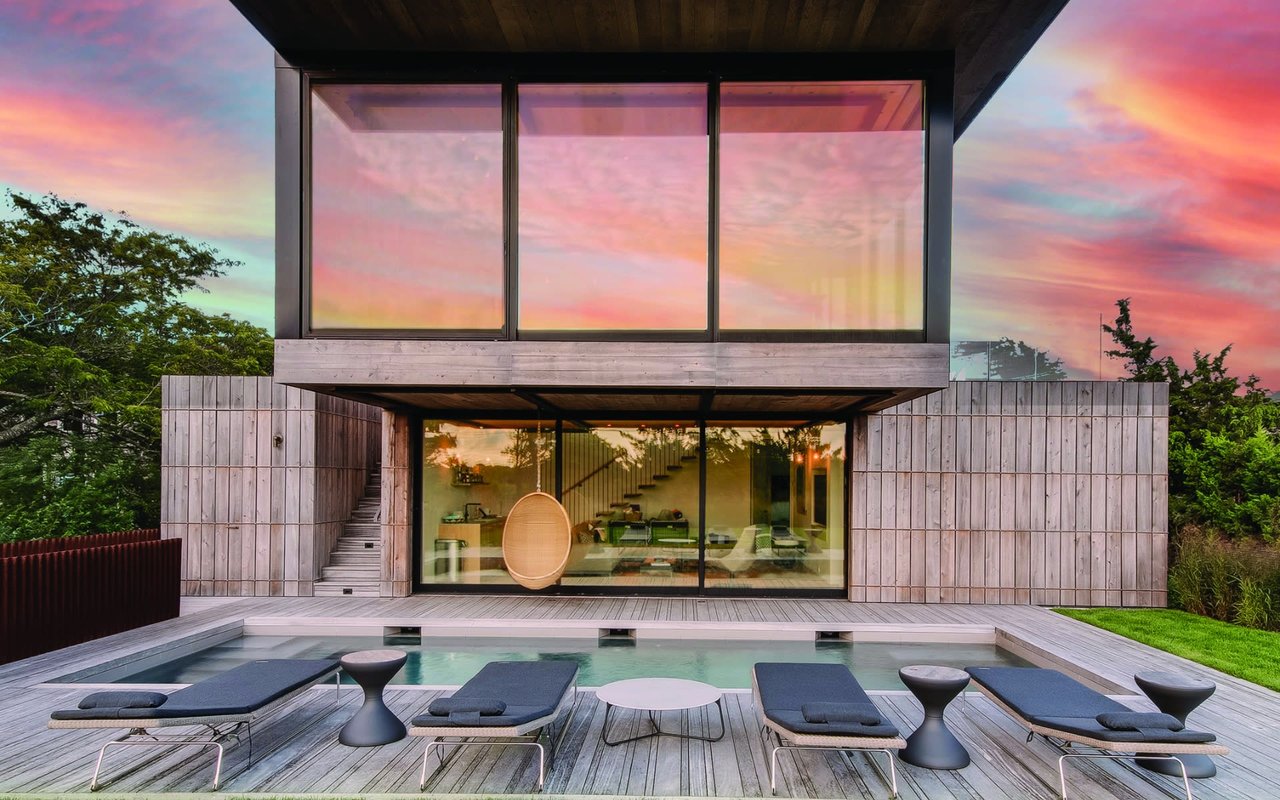
Over four days, June 25 through 28, thirty-two exhibitions unfolded across the campus's studios and grounds. Galleries including Gallery FUMI, The Future Perfect, Maison Gerard, Todd Merrill Studio, and Leila Heller Gallery installed sculptural furniture and collectible design in dialogue with the architecture rather than in booths. A special commission by artist Rachel Hayes turned the trees into cherry-red textile hangings that doubled as picnic blankets. Wilson's own third-floor apartment, his actual summer residence, opened for private tours where a small René Magritte cloudscape sat above smoke-fired ceramics and a Navajo blanket. Preview day was invitation-only. Public access ran June 26 through 28 with registration required.
Bellavance-Lecompte put it this way: "The Hamptons hold particular significance as a place historically shaped by artistic experimentation," he told Modern Luxury ahead of the opening. He could have picked Manhattan. He picked a hamlet of roughly 1,500 year-round residents.
A Campus Built for This, and for Loss
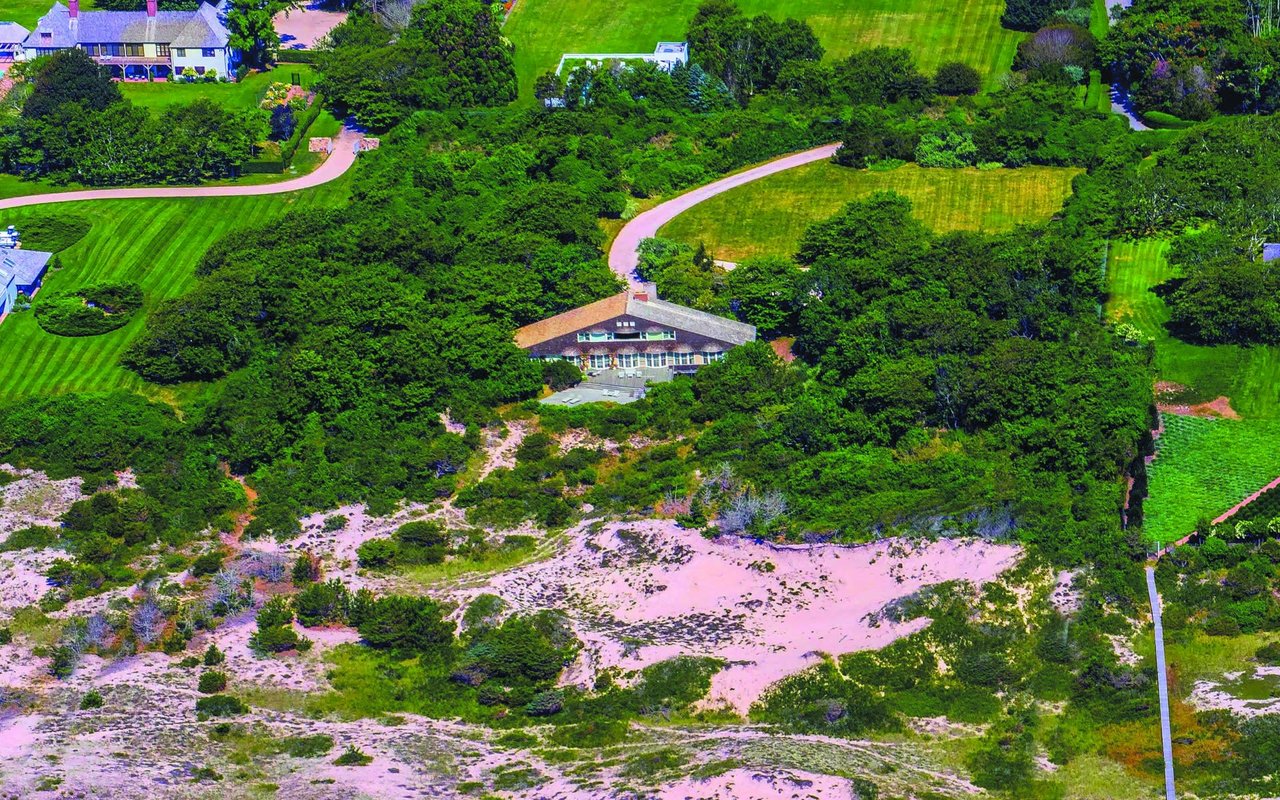
The Watermill Center sits on land that was once a Western Union research facility, rebuilt with architect Richard Gluckman and opened to the public in 2006, fourteen years after Wilson first acquired the site. It runs year-round artist residencies and, every July, a benefit that draws the New York art world east. This year's edition, "Limitless Time," ran July 24 and 25, presented by Van Cleef & Arpels, with an artists' reception, performances, and dancing to support the Center's ongoing programs.
Wilson once called the Watermill Center his greatest artistic achievement. Design press covering NOMAD's arrival noted plainly that this was the first major cultural event on the campus since his death. Two headline events inside of a month, on a property built around one person's vision, running for the first time without him physically present. That's not a detail you'd find in a typical events roundup. It's the story underneath the events.
The Parrish Is Keeping Its Own Kind of Tribute
Two miles down Montauk Highway at 279 Montauk Highway, the Parrish Art Museum isn't reacting to anything happening at the Watermill Center. It's mid-way through PARRISH USA250: Life, Liberty, and the Pursuit of Happiness, a yearlong exhibition series marking the country's 250th anniversary. Regeneration: Long Island's History of Ecological Art and Care, featuring artists like Sara Siestreem and Maya Lin, closed June 14. Sanford Biggers: Drift opened in May. Tony Bechara: An Artist of Many Worlds opened June 27 and runs through November 1, the museum's first career-spanning retrospective of the Puerto Rican abstractionist, timed to coincide with the one-year mark of Bechara's own death.
That's worth pausing on. Two institutions less than two miles apart, one artist community, both running major tribute exhibitions the same summer for founders who died within roughly a year of each other. Nobody planned that coincidence. It's just what a season looks like when a small art colony loses two of its own.
The Parrish doesn't stop there. Abstract Expressionism: The East End, 1940 to Today opens September 27 and runs through February 14, 2027, with work from James Brooks, Elaine de Kooning, Willem de Kooning, Lee Krasner, and Frank Wimberley. The year closes with William Merritt Chase and Walter Granville-Smith: American Impressionists of the East End, opening November 16. If Bechara's retrospective is this summer's headline, the museum has already scheduled what comes after it.
Two Miles Away, on Farm Stand Time
None of that changed what's happening at ground level along the same corridor. Milk Pail, at 757 Mecox Road, is currently open Wednesday through Sunday, 10 a.m. to 5:30 p.m., having added Wednesdays to the schedule after July 4th. The u-pick rows for apples, pumpkins, and sunflowers are already marked off along the back acreage for late summer.
| Stop | Location | What's running now |
|---|---|---|
| Milk Pail | 757 Mecox Rd | Wed-Sun market hours; u-pick rows staked for apples, pumpkins, sunflowers |
| Hank's Farm Stand and Pumpkintown | 149 Montauk Highway | Roadside stand carrying into fall pumpkin season |
| Halsey Farm Store | 513 Deerfield Rd | Year-round farm store |
Hank's, at 149 Montauk Highway, sits on the same road as the Parrish, a few miles down. Halsey Farm Store on Deerfield Road runs its own daily counter. The farm stands and art events ran on separate schedules along the same corridor.
The Fourth Clock
There's a third calendar running underneath both of the others. The Water Mill Museum occupies a building more than 250 years old, built around a working water-powered grist mill that still turns. Inside, the exhibits run to ice harvesting, whaling, and Civil War-era farming, the actual daily life of the settlement that gave the hamlet its name back when Edward Howell first got 40 acres from the English crown to grind grain for the colony. The museum keeps modest hours, open from 11 a.m. to 4 p.m. and Sundays from 1 to 4 p.m., closed Monday through Wednesday and on July 4th. Membership runs $25 for an individual, $30 for a family, with 10 percent off in the gift shop and a waived entry fee for members showing in the annual art exhibit.
That's the real shape of Water Mill this year. A global design fair ran here for four days on its very first American stop. A museum two miles away is a third of the way through a national anniversary program that's already scheduled through 2027. A trio of farm stands remained part of the everyday landscape. And a 250-year-old mill building kept turning through all of it, on a clock that predates every name on this list. Four different timescales, all inside a couple of miles, none of them needing the others' attention to keep running.
That layering, not any single opening or gala, is what makes Water Mill work the way it does. It's also the kind of texture that doesn't show up in a listing sheet or a market report, only in paying attention to a place over a full season.
If you're weighing what a summer like this actually says about a hamlet you're watching closely, that's the conversation Michael Petersohn has with clients directly. Request a Personal Market Consultation to talk through what's happening on the ground here, beyond the calendar.