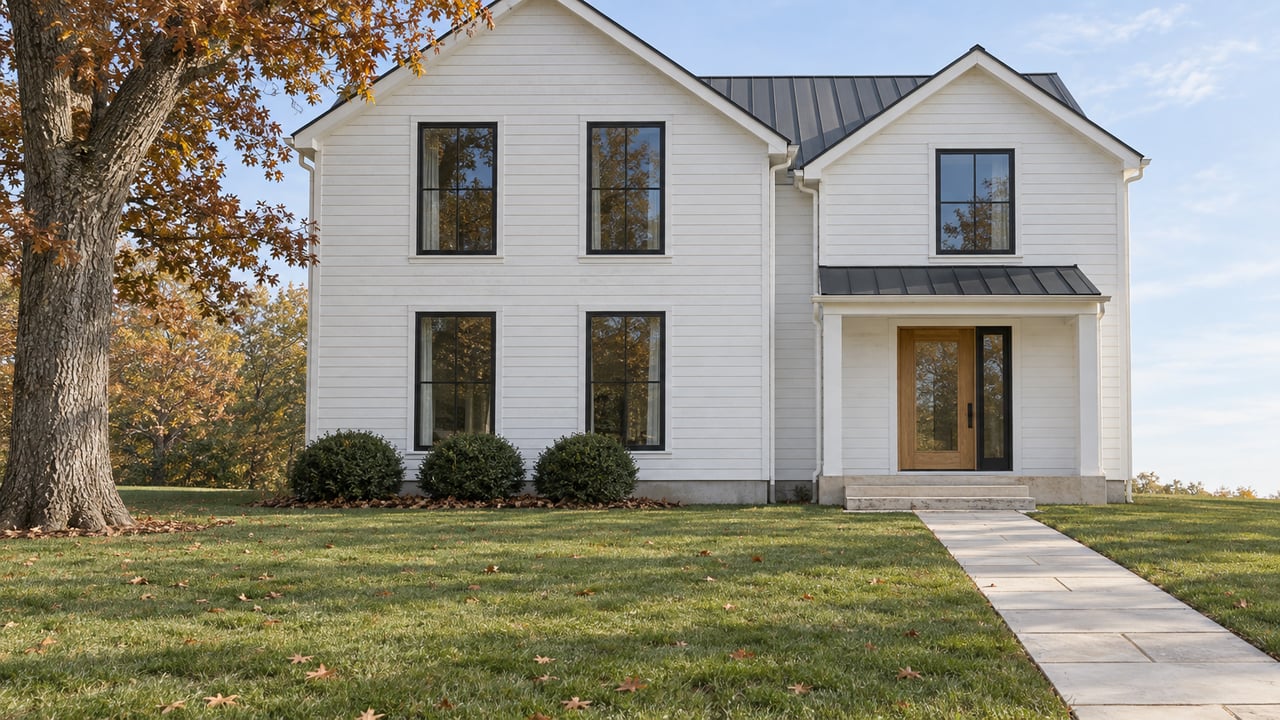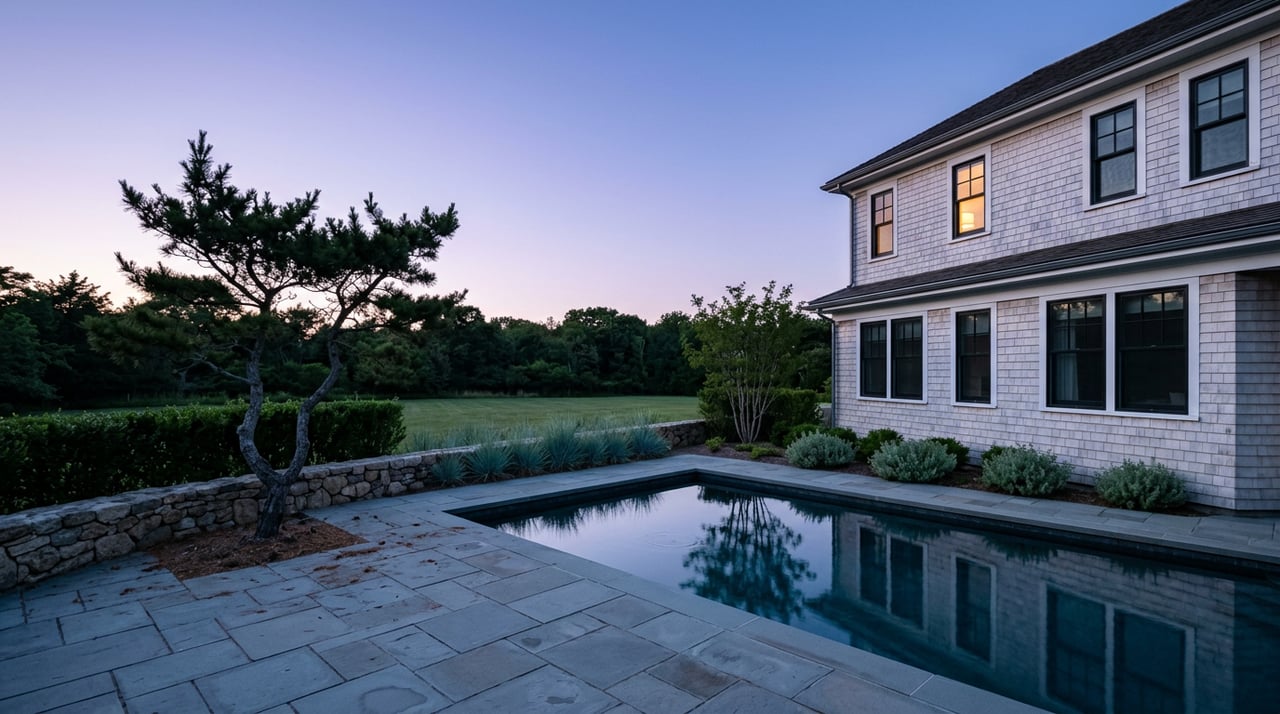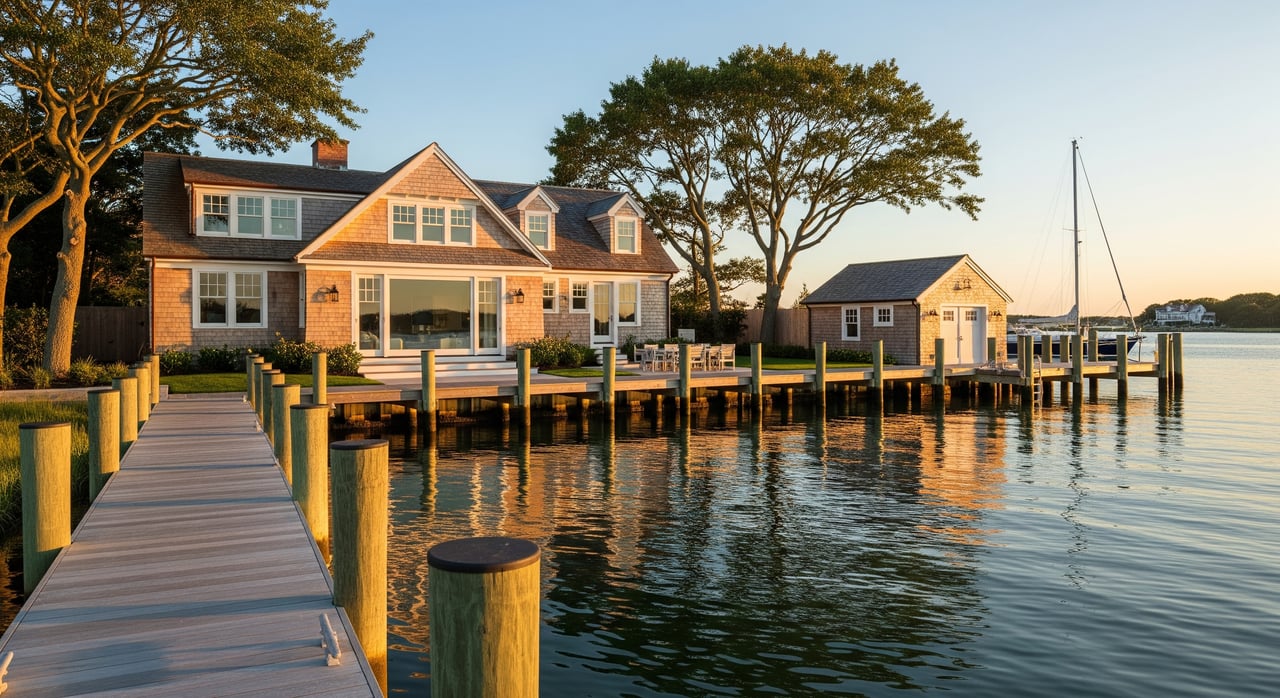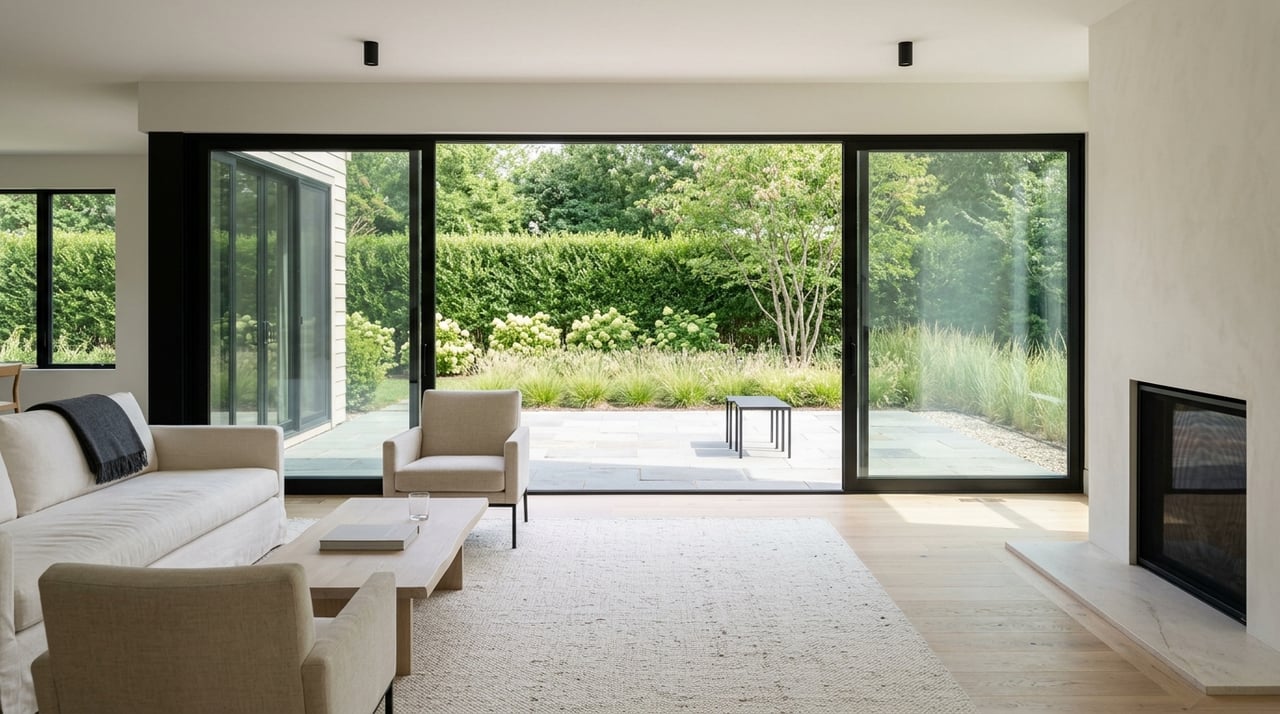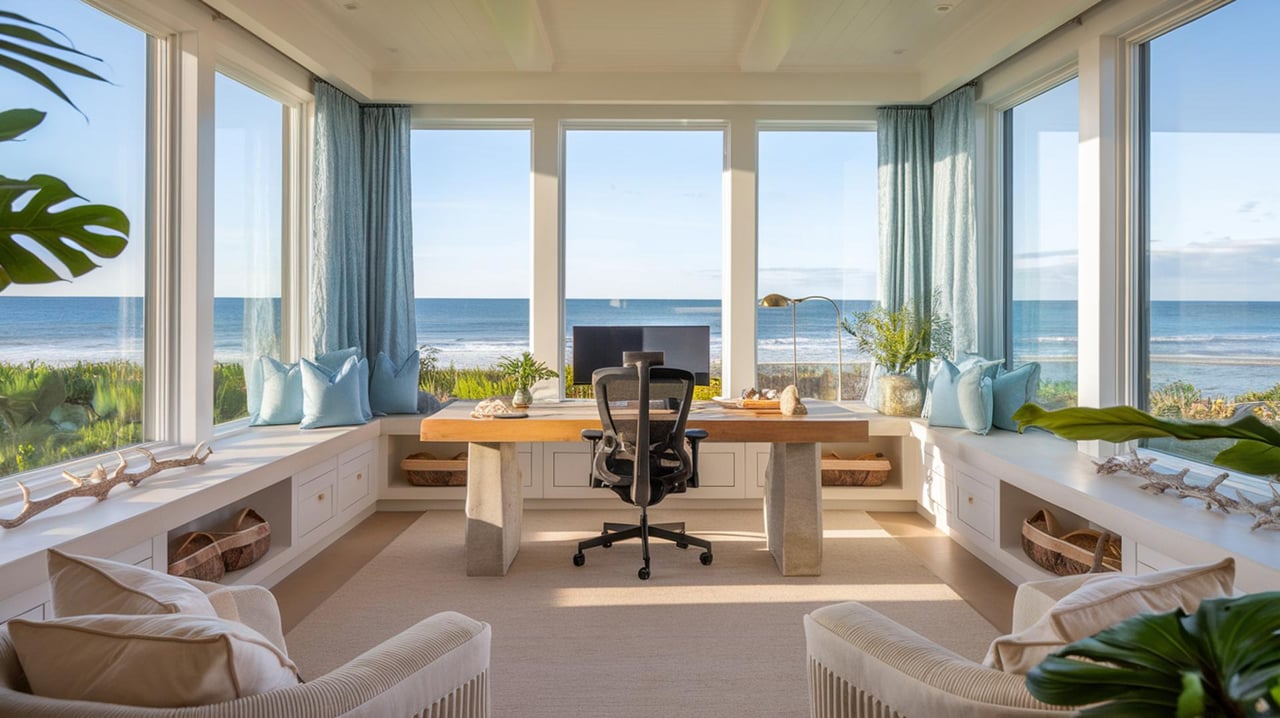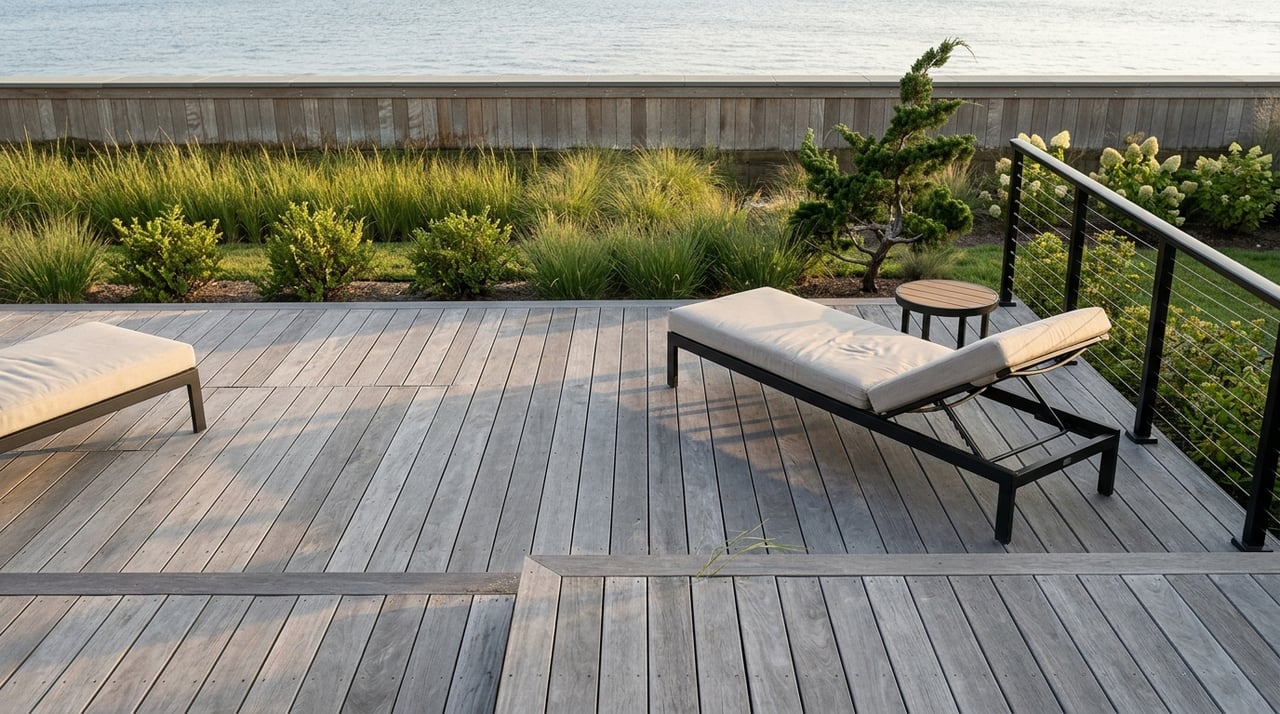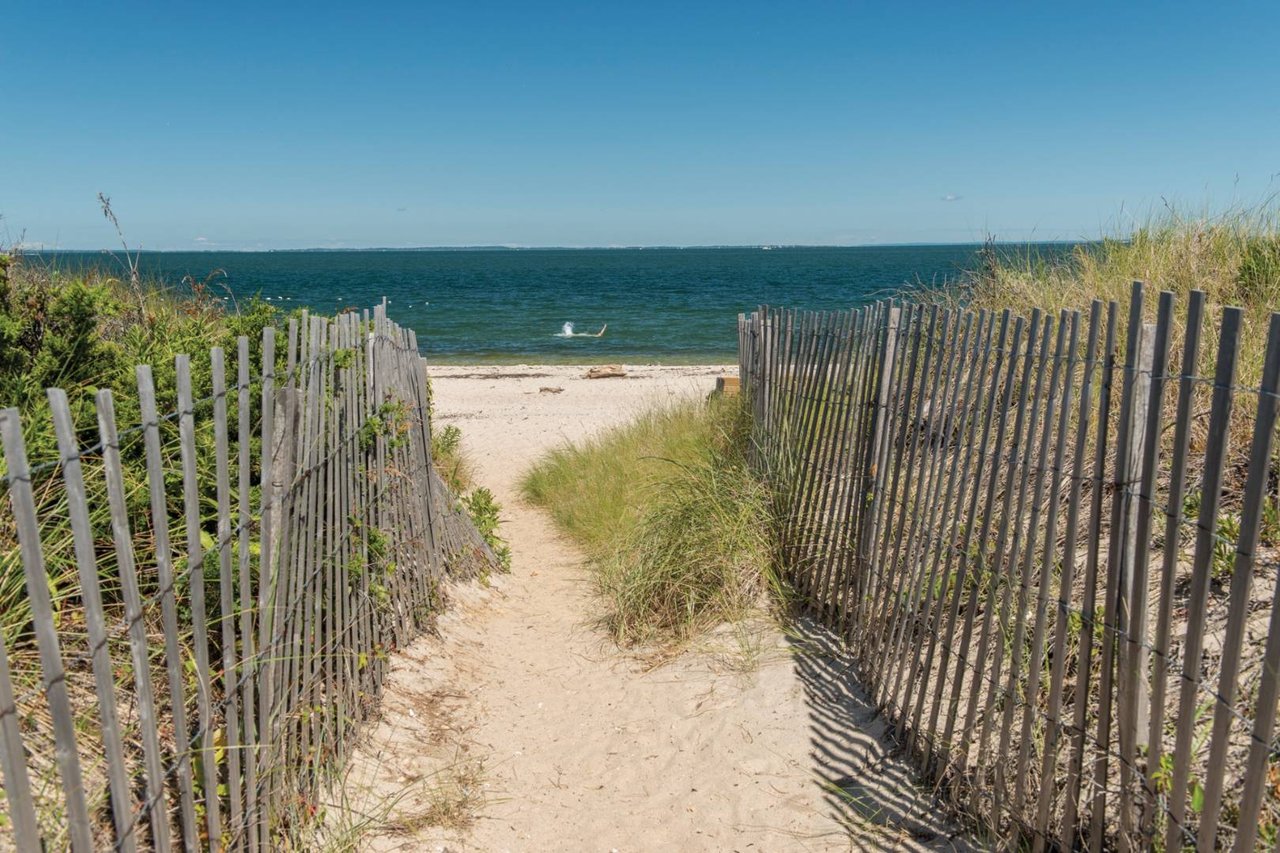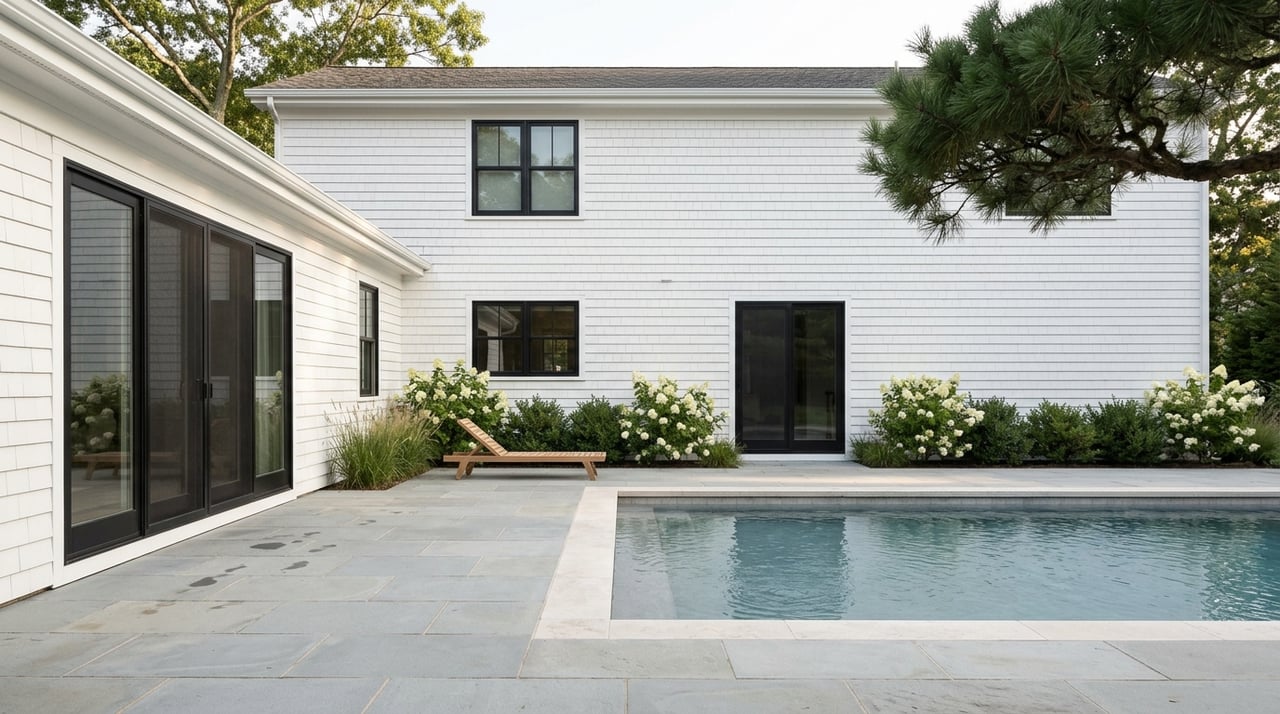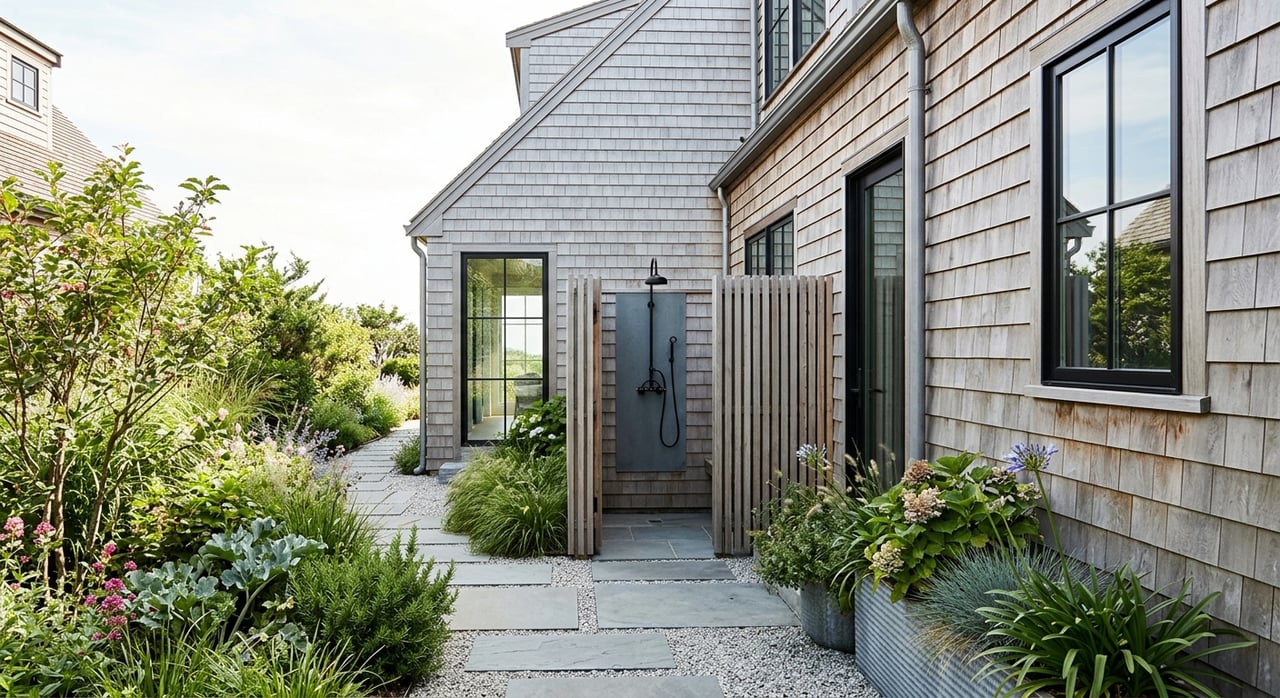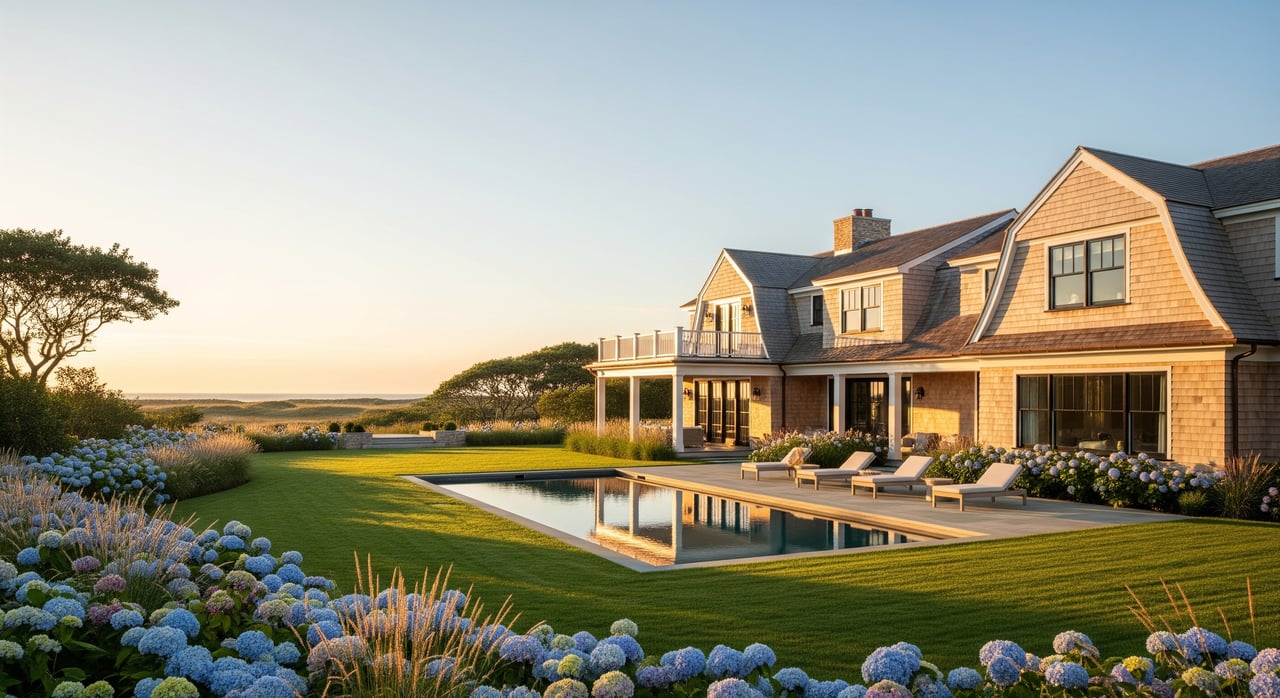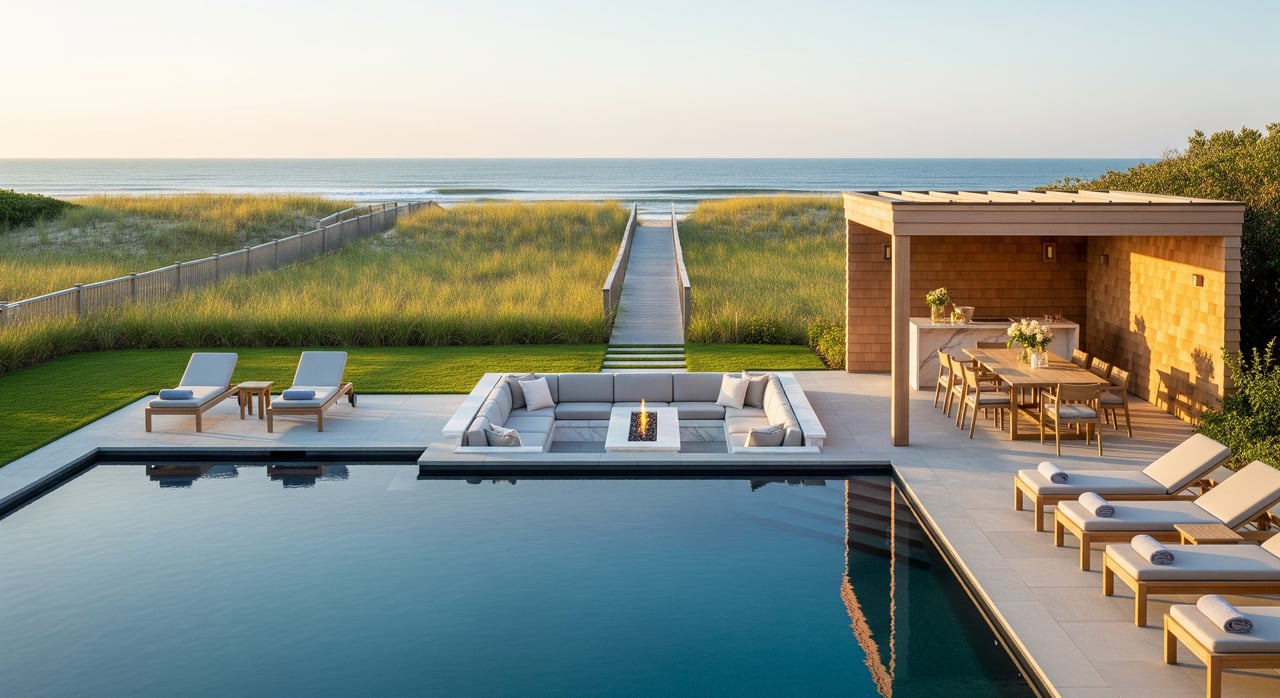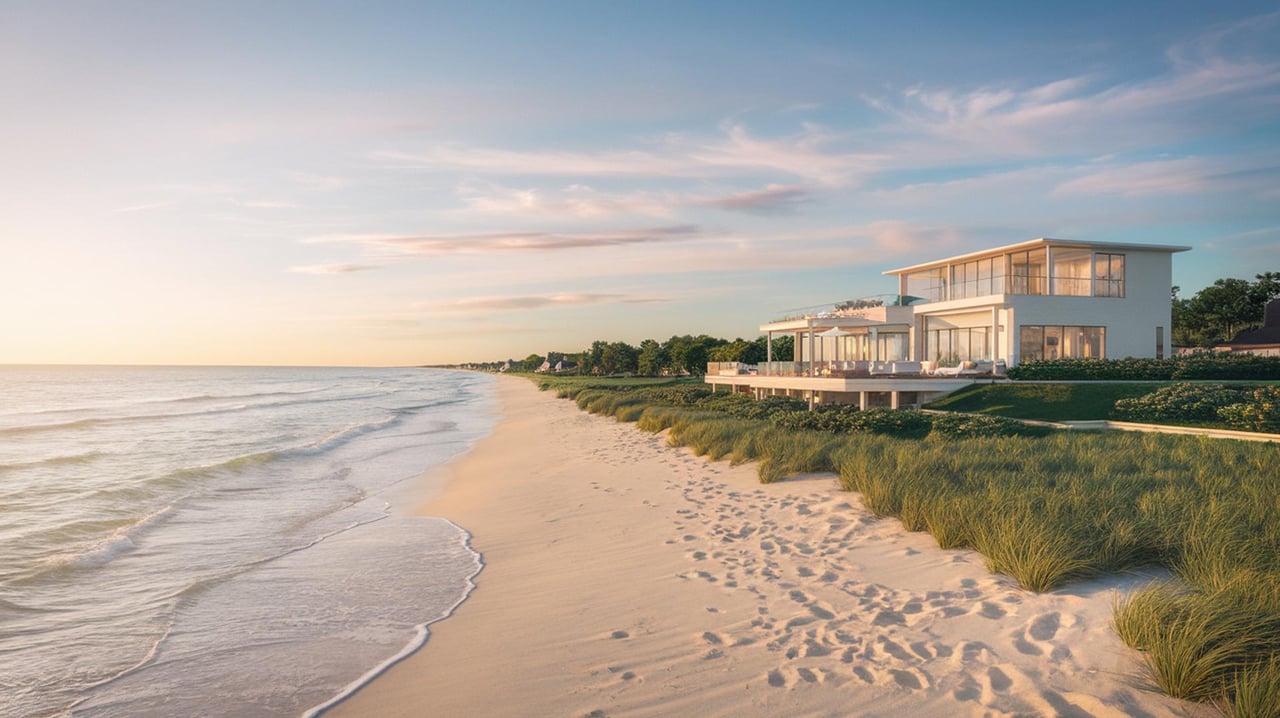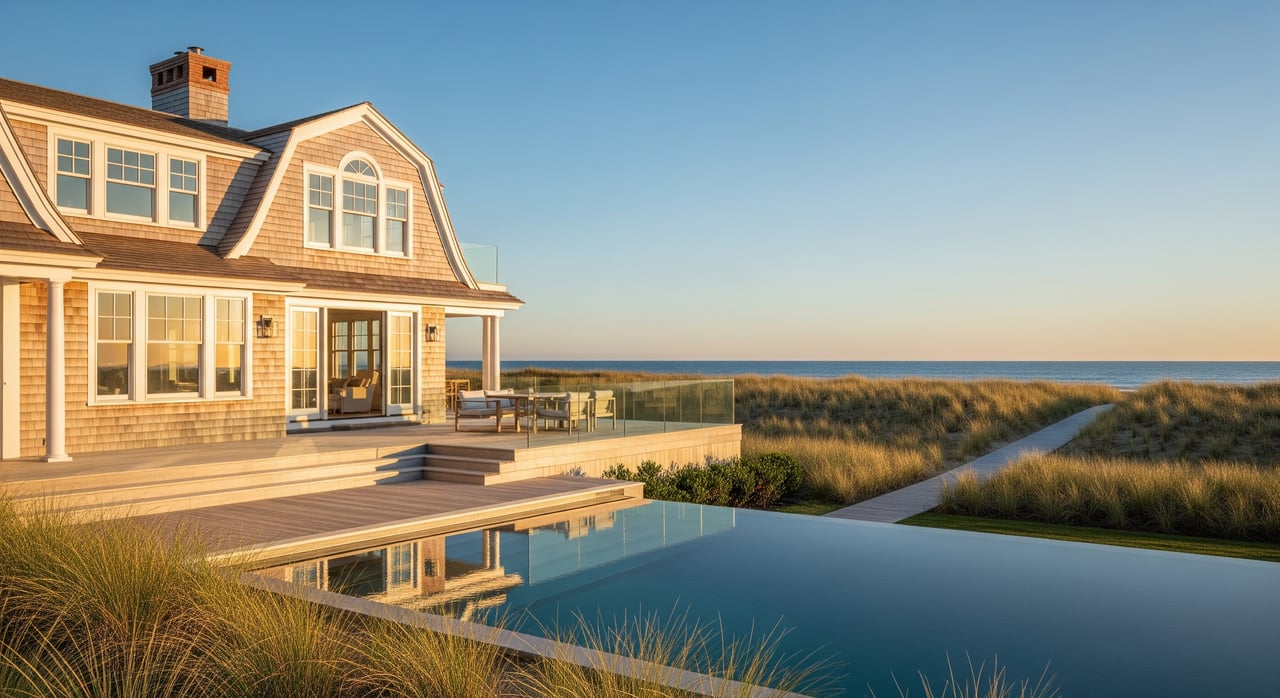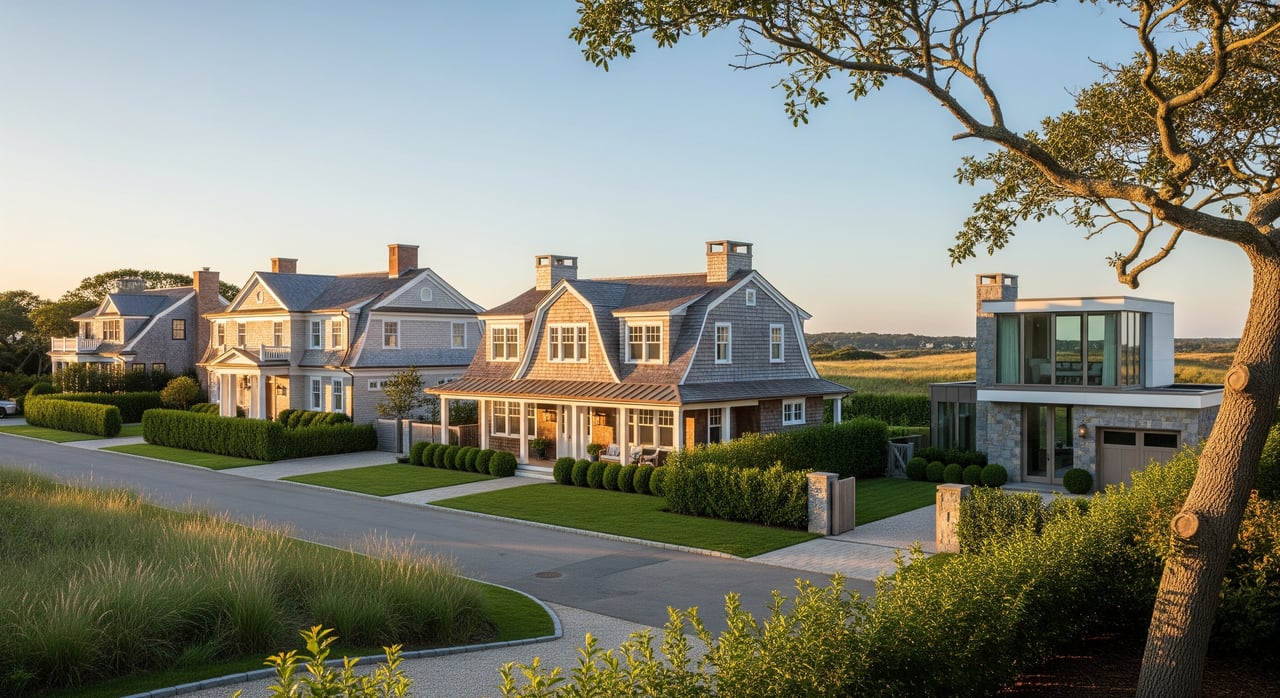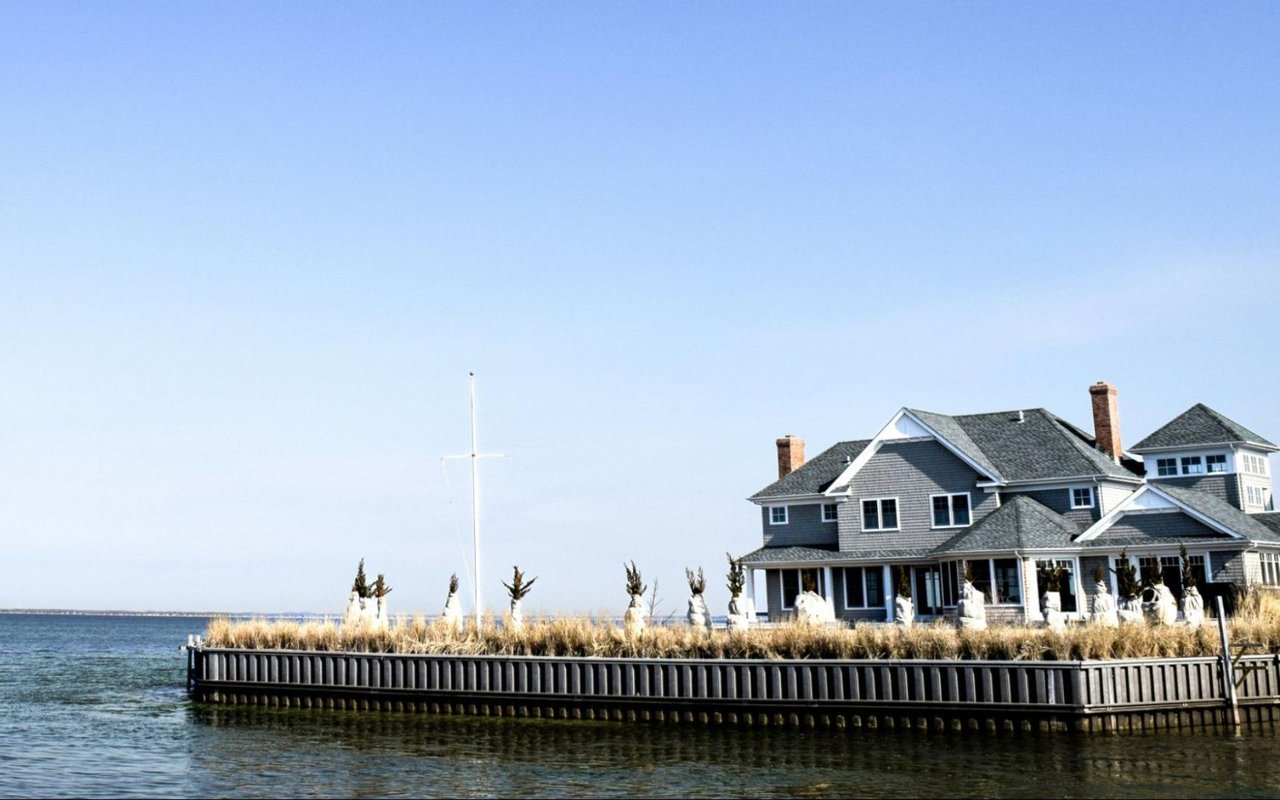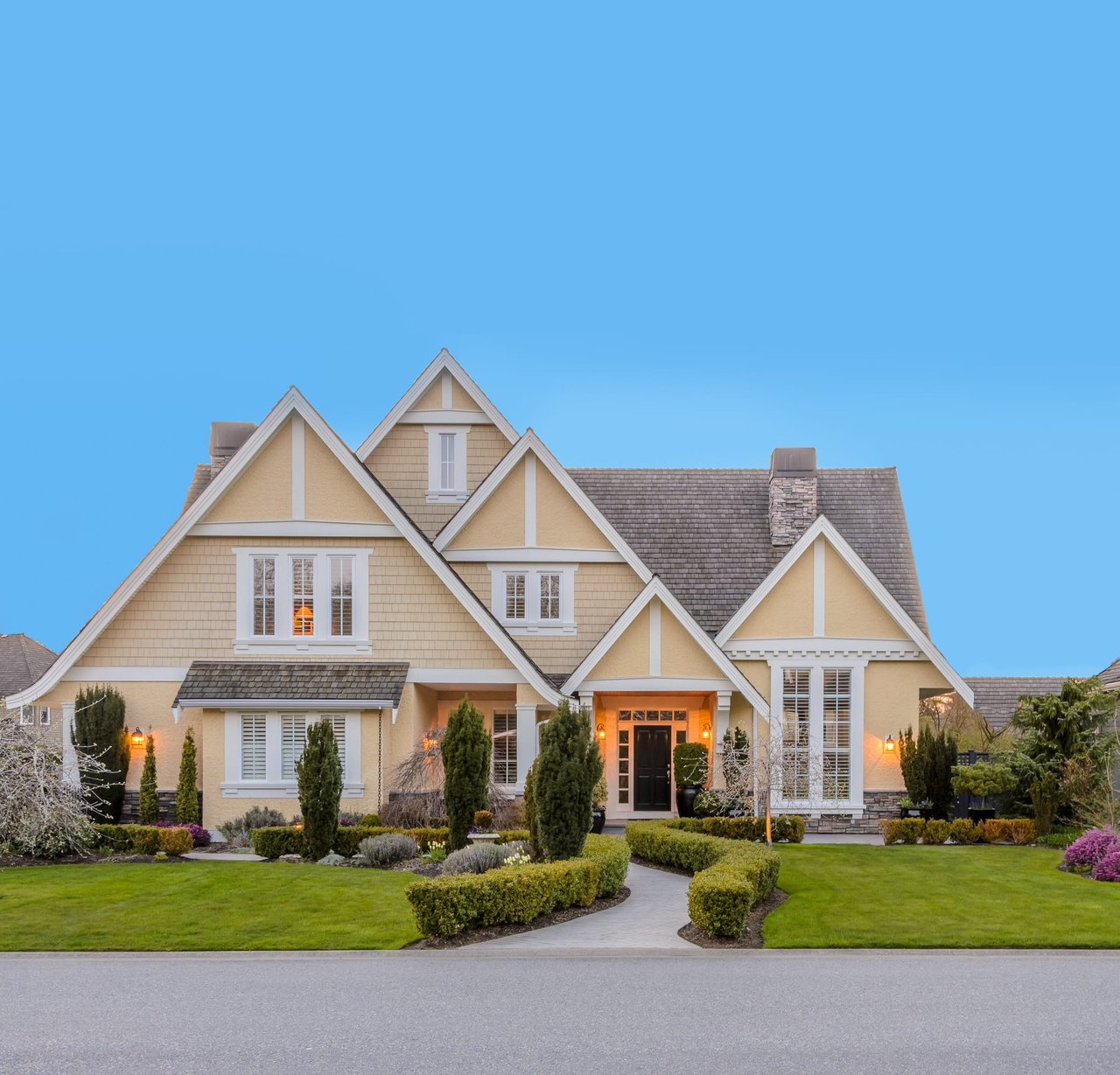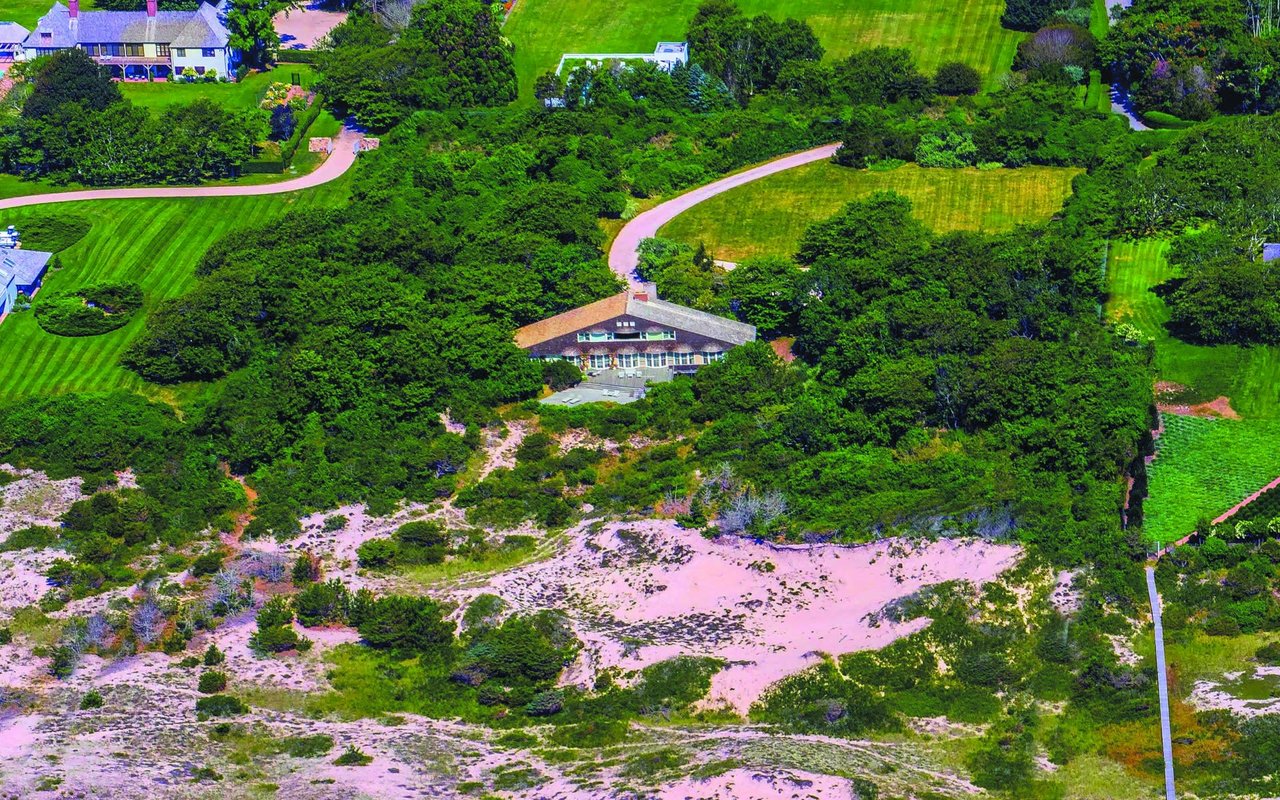
A buildable parcel on Gin Lane or First Neck Lane in Southampton runs $8 million to $20 million. A buildable parcel on the north side of Montauk Highway, in Noyac or North Sea, runs $2 million to $6 million. Both parcels touch open water. Both sit within the same town. The difference in price has almost nothing to do with the water and almost everything to do with which side of a two-lane road the deed falls on.
That gap is the starting point for understanding what a dollar actually buys in Noyac and North Sea right now, and why the hamlets have started drawing a different kind of buyer than the one who's already priced out of Southampton Village.
The Highway Is the Product
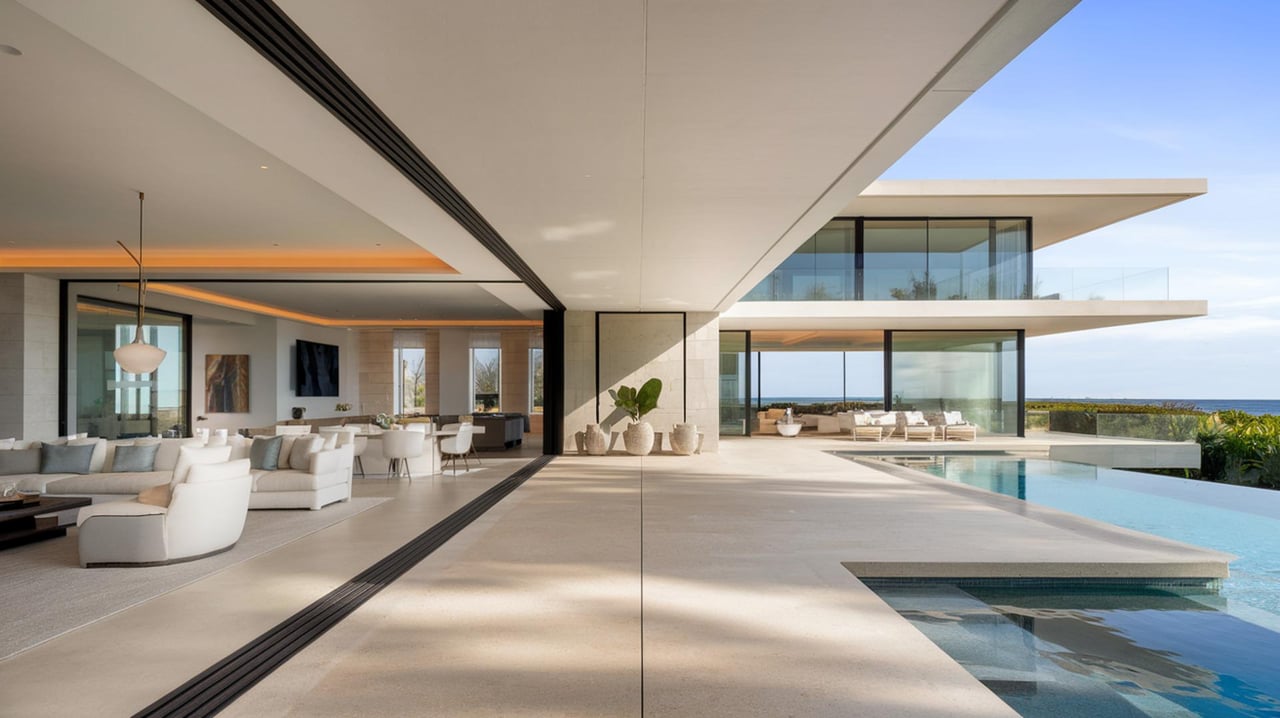
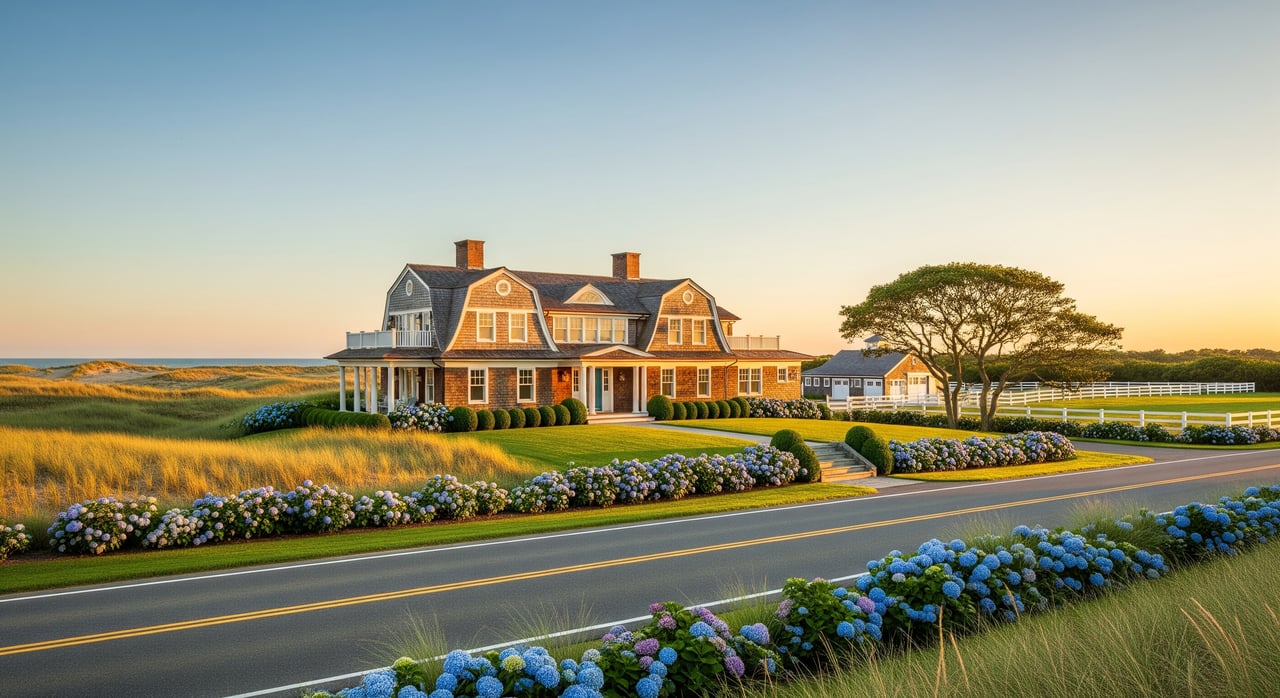
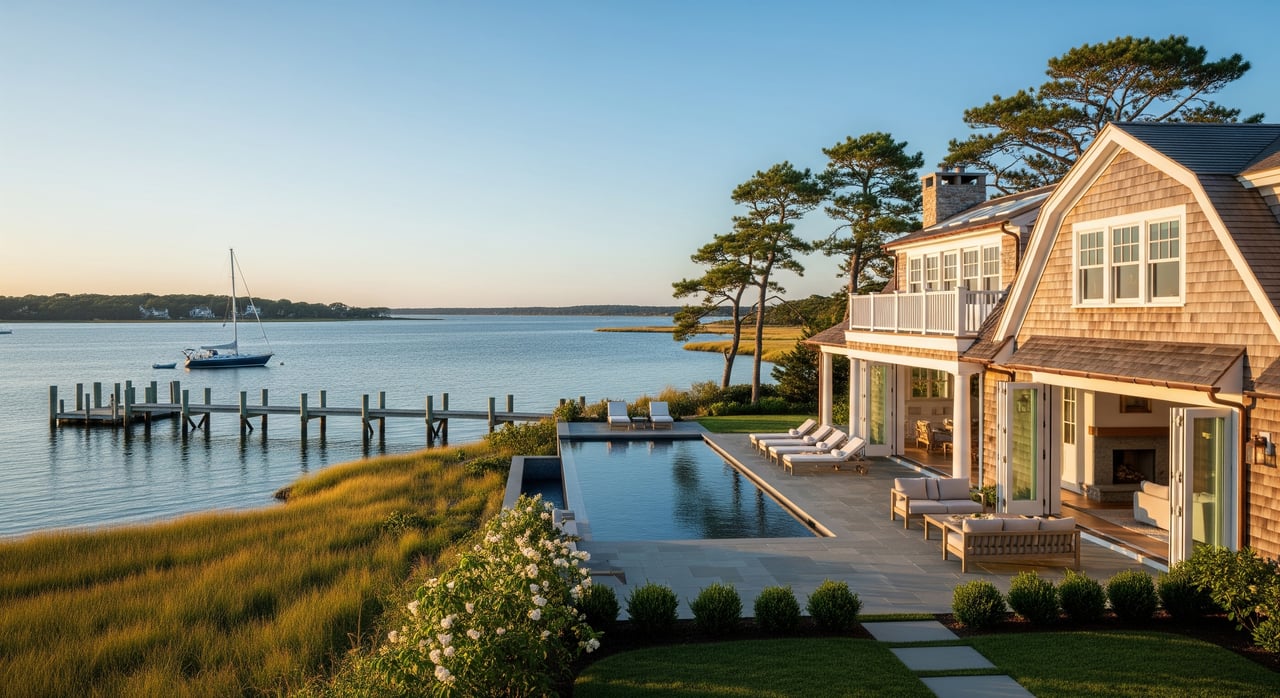
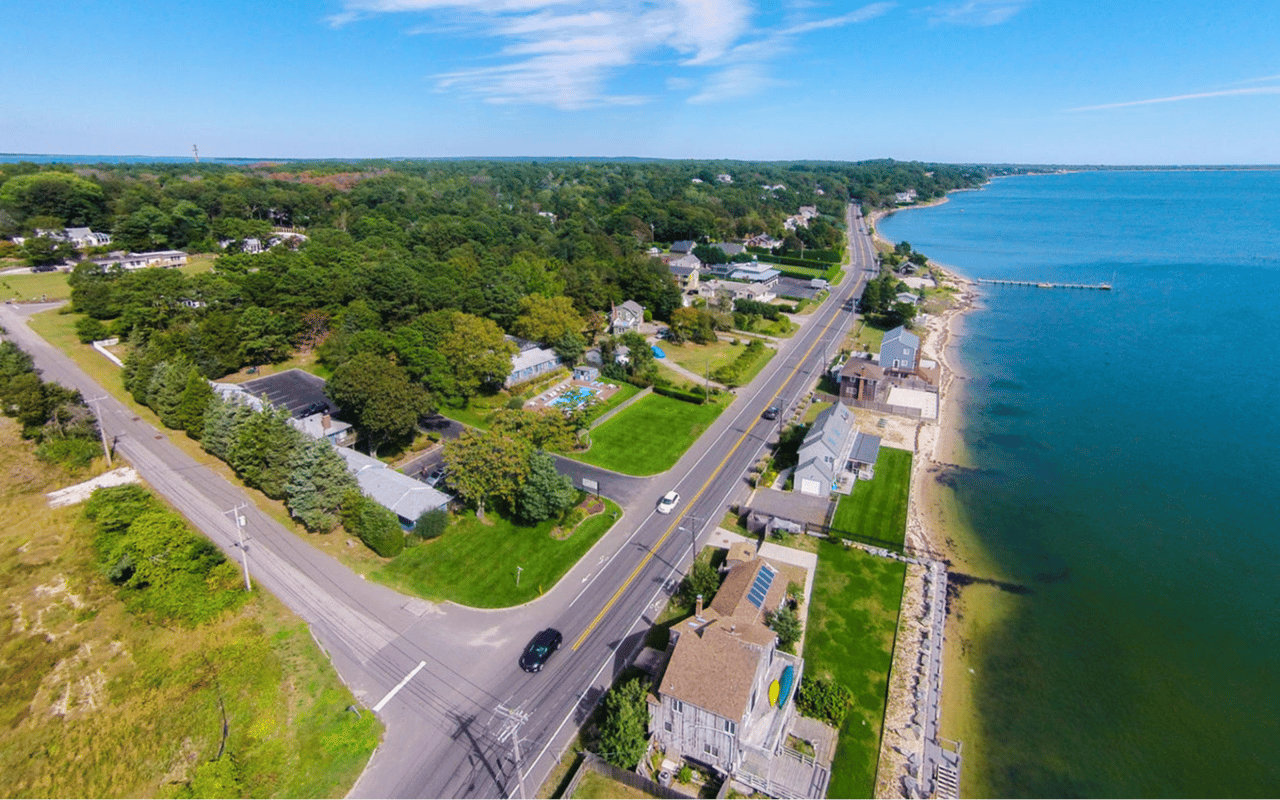
Southampton's land market splits cleanly along Route 27. South of the highway, in the estate corridor that includes Gin Lane, First Neck Lane and Coopers Neck, buildable oceanfront can reach $20 million to $50 million for the best parcels, with general south-of-highway sites running $8 million to $20 million. North of the highway, where Noyac and North Sea sit along Little Peconic Bay, quality building sites trade for $2 million to $6 million.
Listings themselves treat this as a formal boundary rather than a geographic aside. Search current inventory in Southampton and you'll find agents describing homes as "south of the highway" the way a co-op board describes a Park Avenue address, as a category unto itself, distinct from bayfront, distinct from pond-front, distinct from everything on the other side of the road. It's a pricing tier that gets stated outright in the listing copy, not one buyers have to infer.
That's the mechanism worth understanding before comparing a Noyac bay house to a Southampton ocean house on price per square foot alone. You are not comparing two waterfront products with a quality gap between them. You are comparing two sides of a line that was drawn generations ago and has been repriced by the market every year since.
What the Discount Looks Like on the Ground
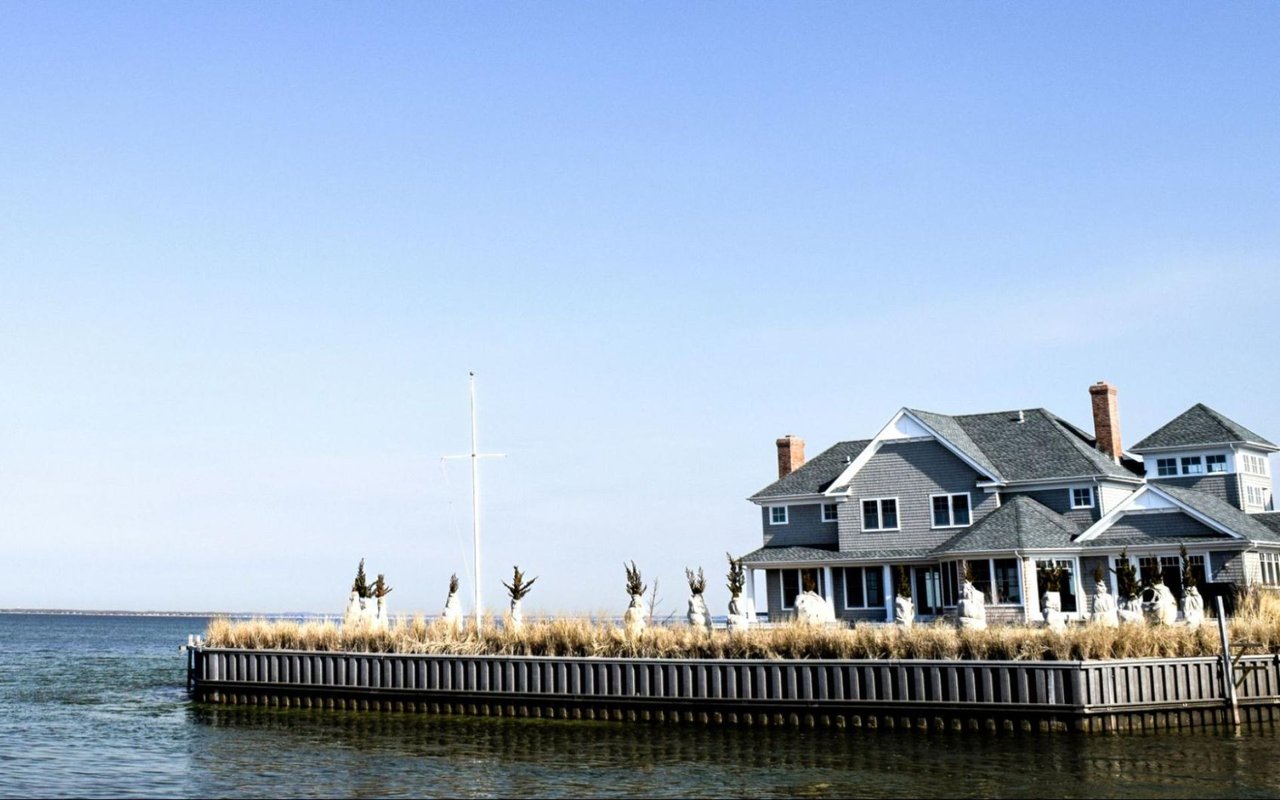
Zillow's tracking put the average home value in North Sea at $1,639,028 as of late summer 2026, up 5.4 percent over the prior year. That single figure undersells how much range sits inside it. A bayfront listing on Noyack Road came to market this year at $1,890,000 for a 2,560-square-foot house on just under half an acre. A few doors down, a 4,758-square-foot property on 1.56 acres sold in January 2024 for $2.1 million. Neither of those is close to the top of the local market: a roughly 6,140-square-foot waterfront estate on 1.7 acres, with a pool, is currently listed at $10.95 million.
That's roughly a $9 million spread within a single road in a single hamlet. South of the highway, that same spread might separate a modest cottage from a trophy estate. North of the highway, in Noyac, it separates a comfortable bay house from a genuine estate property, and both are still priced well under what a comparable ocean lot commands three miles south.
The Same Hamlet Can Swing by 90 Percent in a Few Years
Water frontage type does most of the sorting once you're inside Noyac and North Sea's own price range, and a single property's sale history shows how fast that sorting has moved. A 2,772-square-foot house on Lake Drive North in Noyac sold for $629,000 in 2016, or $227 a square foot. It traded again in 2019 for $840,000, or $303 a square foot. By 2022 it sold for $1.205 million, or $435 a square foot, a 44 percent jump from its previous sale and just under a 100 percent gain from six years earlier.
None of that required the highway line to move. It required the local bay market to catch up to what buyers were already willing to pay elsewhere on the East End, on a house that never crossed into south-of-highway territory and never will. The appreciation happened entirely within the discount, which is a different story than the discount closing.
Investors Are Already Working the Gap
One property currently on the market makes the investor case for North Sea more plainly than any market report could. It's a 0.51-acre parcel with two detached ranch-style homes, each with two to three bedrooms, configured as a legal two-family. Listing language calls the section "up-and-coming" and pitches the property as a blank canvas for investors and builders.
That framing matters for anyone reading this site's landlord and investor resources. A legal two-family designation on a half-acre bayside lot is a different kind of asset than a single trophy estate: it's a cash-flow property with renovation upside sitting inside a submarket that's still priced at a fraction of its southern neighbor. Across the broader Hamptons, 2025 closed with a median home sale price of $2.2 million, up 16 percent year over year, and dollar volume up 21 percent to just under $5.9 billion, driven heavily by sales over $20 million more than doubling from 14 to 29 transactions. That strength has been concentrated at the very top of the market. North Sea's two-family listing is a bet that some of it eventually reaches the bottom of the highway divide too.
The Water Doesn't Know It's on the Wrong Side
None of this discount reflects a verdict on the bay itself. North Sea and Noyac have built a self-sustaining local economy that doesn't depend on proximity to Route 27 to function. Pellegrino's, off Noyac Road, is run by Brian and Pam Blackburn, with Brian in the kitchen and Pam on the floor, and it's drawn attention this year as one of a cluster of owner-operated restaurants along that stretch. A few minutes further, Mill Creek Marina sits on 145 slips with its own restaurant, the Bell and Anchor, drawing boaters from Shelter Island and both forks.
None of that changes what a parcel costs. It does mean the discount buys into a place with its own rhythm, not a placeholder waiting to be discovered. The bay was never the problem. The problem, if you're pricing strictly against the highway line, was always which side of it you were standing on.
A Short FAQ
Isn't North Sea already historic? Why do listings call it "up-and-coming"? North Sea is the site of Southampton Town's original 1640 landing at Conscience Point, making it older than the fashionable south-of-highway sections that came to define the Hamptons centuries later. When current listing copy calls a North Sea parcel "up-and-coming," it's describing price trajectory, not history. The land has been here the whole time. The valuation is what's catching up.
Will the gap between Noyac/North Sea and south-of-highway Southampton ever close? Nothing in the current data suggests the structural line itself will move. What can and does move is pricing within each side. North Sea's 5.4 percent year-over-year gain and the appreciation trajectory on individual Noyac Road properties show the bay side compounding on its own terms, even as the highway continues to separate it from the estate corridor's price tier.
If you're weighing a bayfront property in Noyac or North Sea against an ocean-side listing further south, the number on the sign is only half the story. The other half is which side of the highway you're standing on, and what that line has and hasn't done to the value underneath your feet. Michael Petersohn works this exact comparison with buyers and investors across Southampton Town. Request a Personal Market Consultation to walk through what a specific Noyac or North Sea property is actually worth against its south-of-highway counterparts.
This article is general information, not legal, tax or financial advice. Consult a qualified professional about your situation.