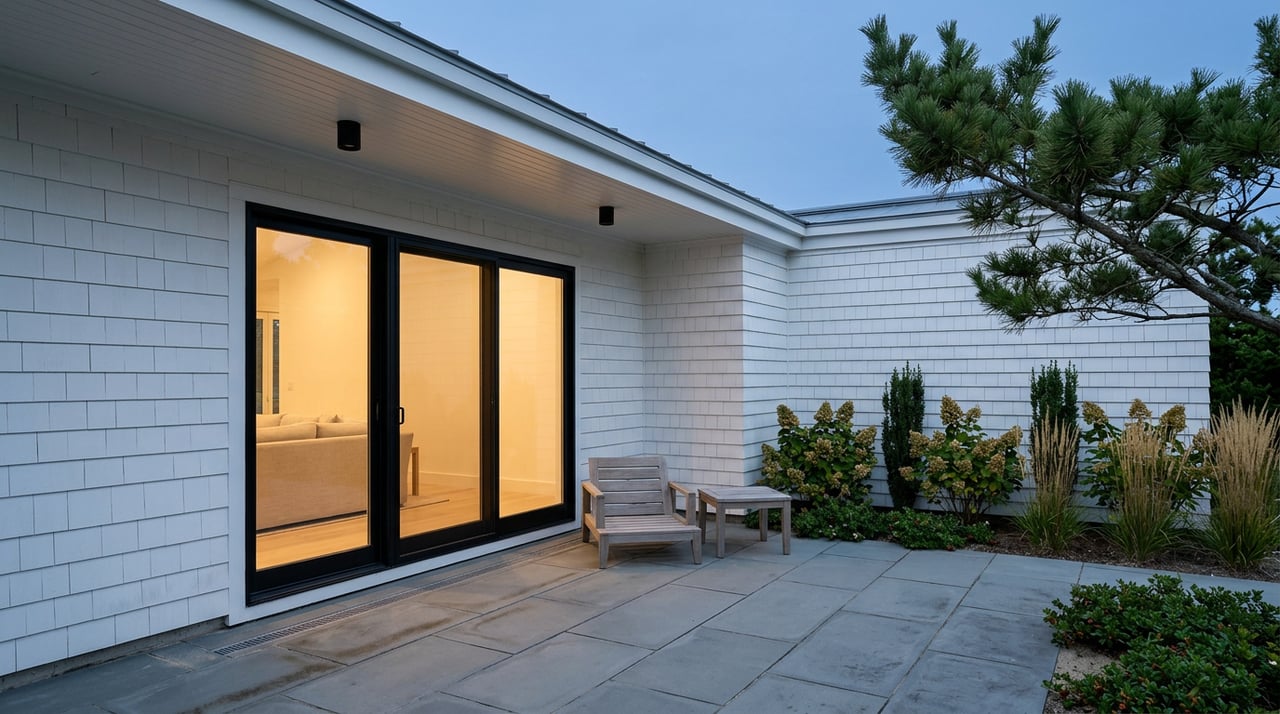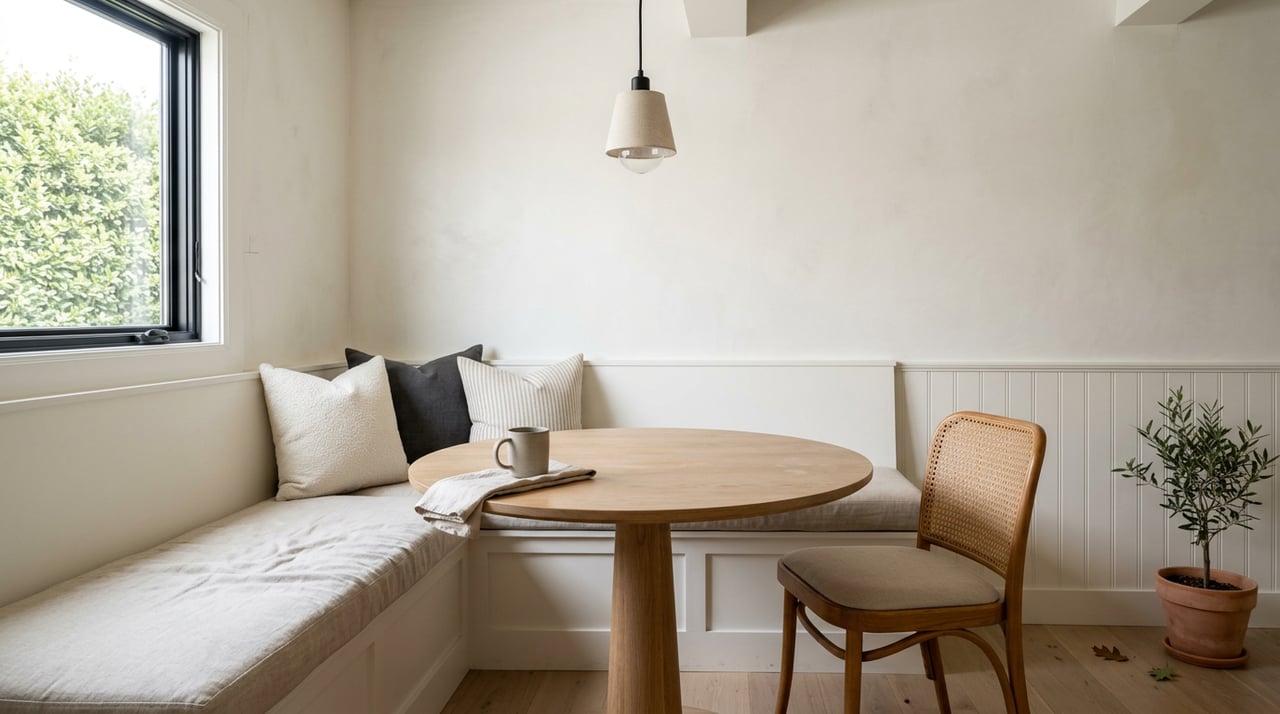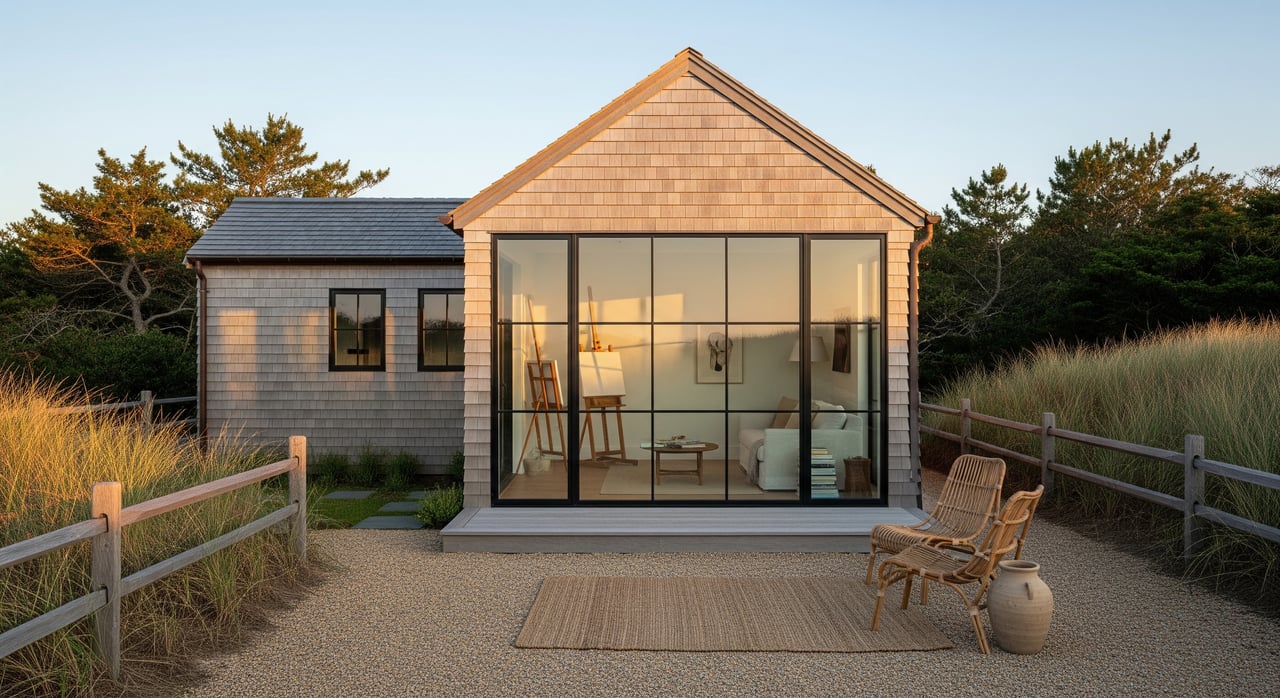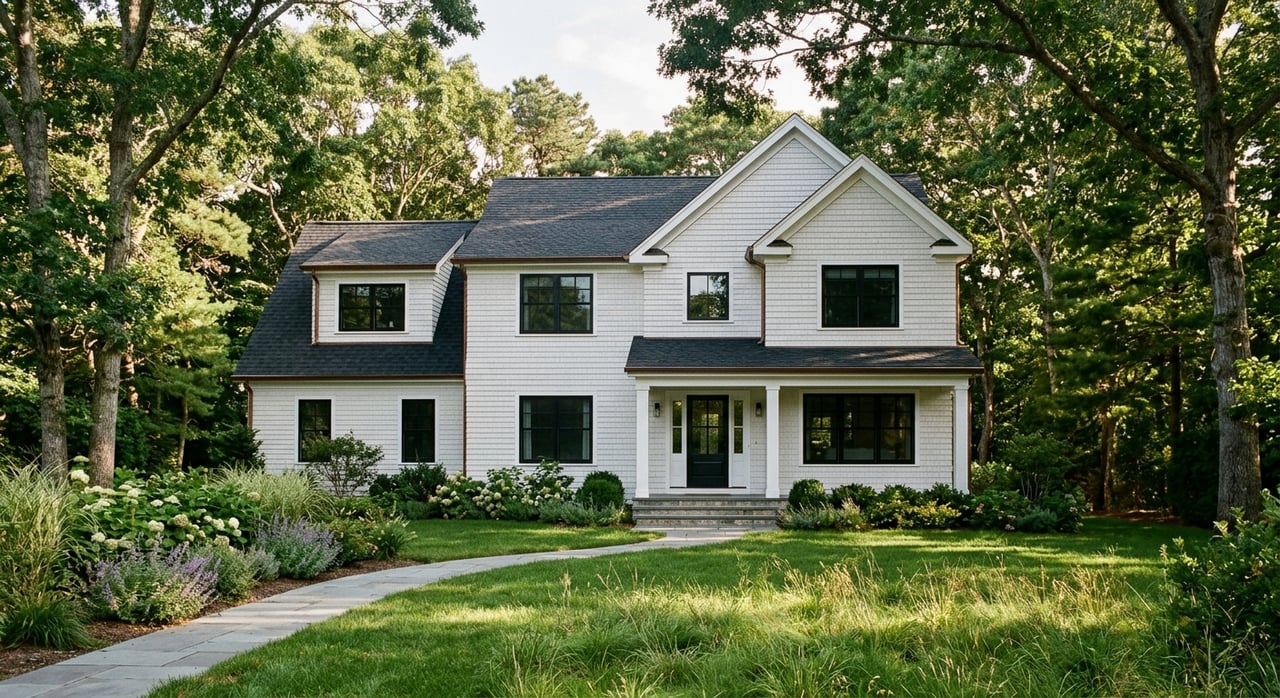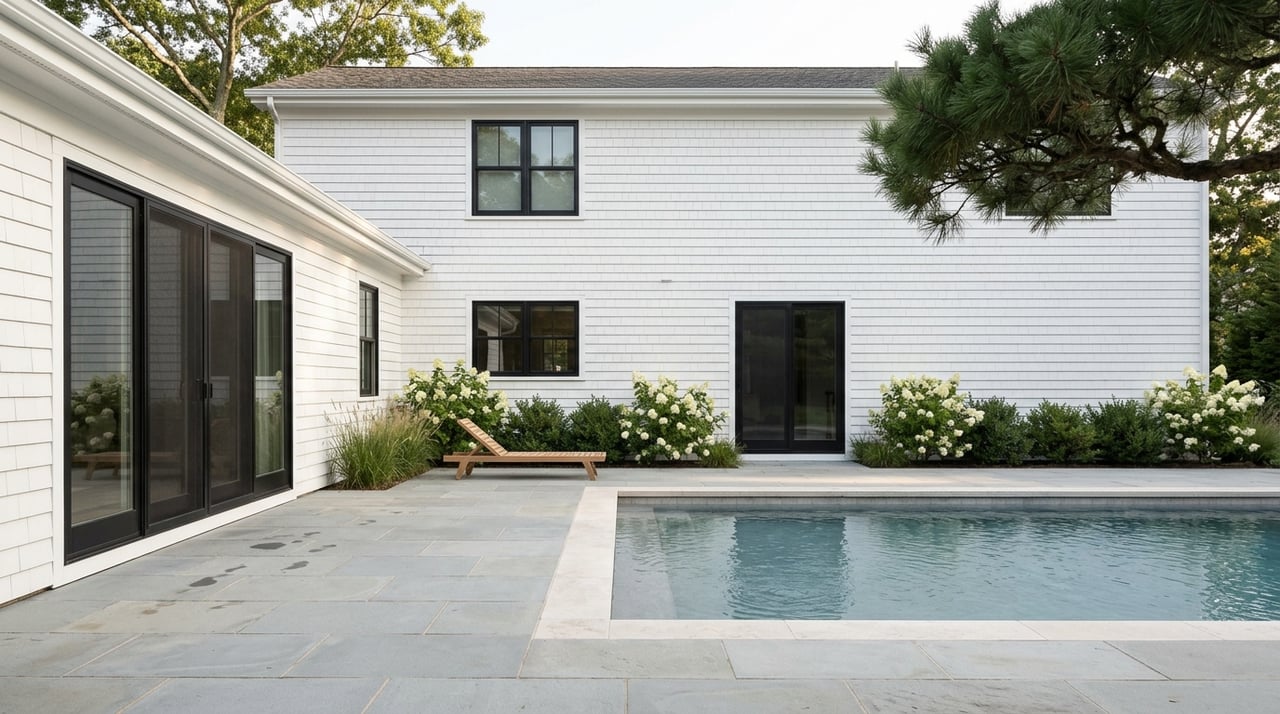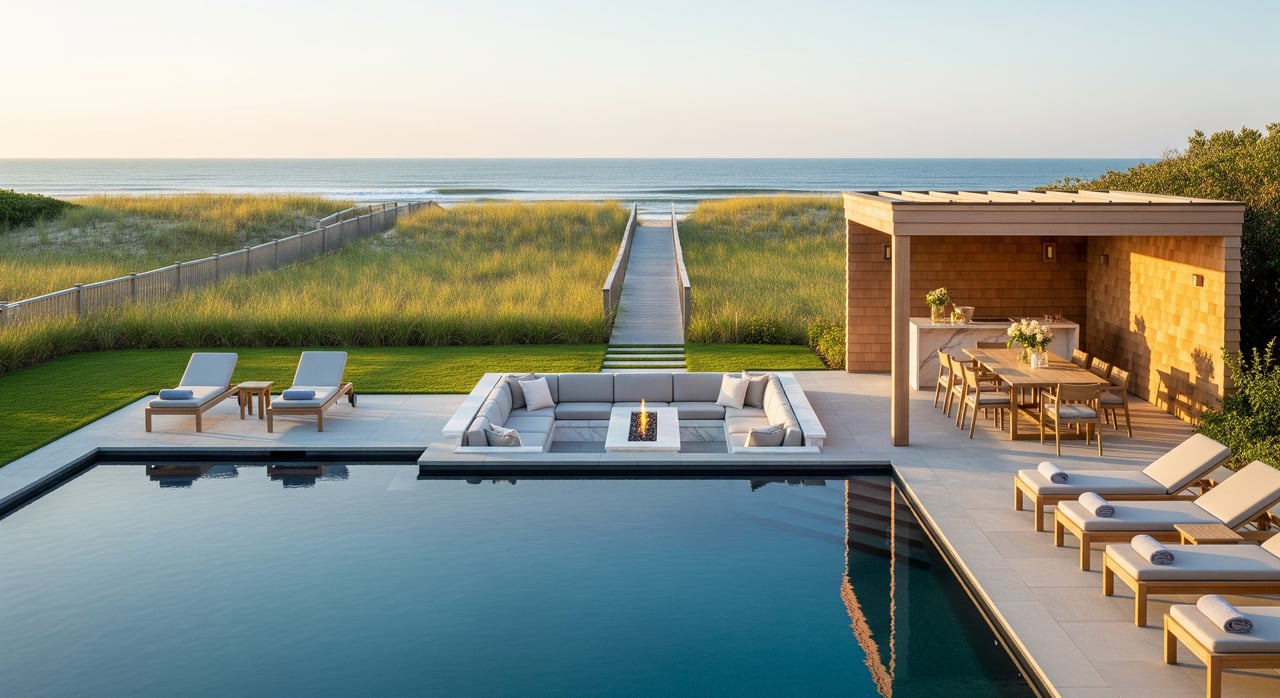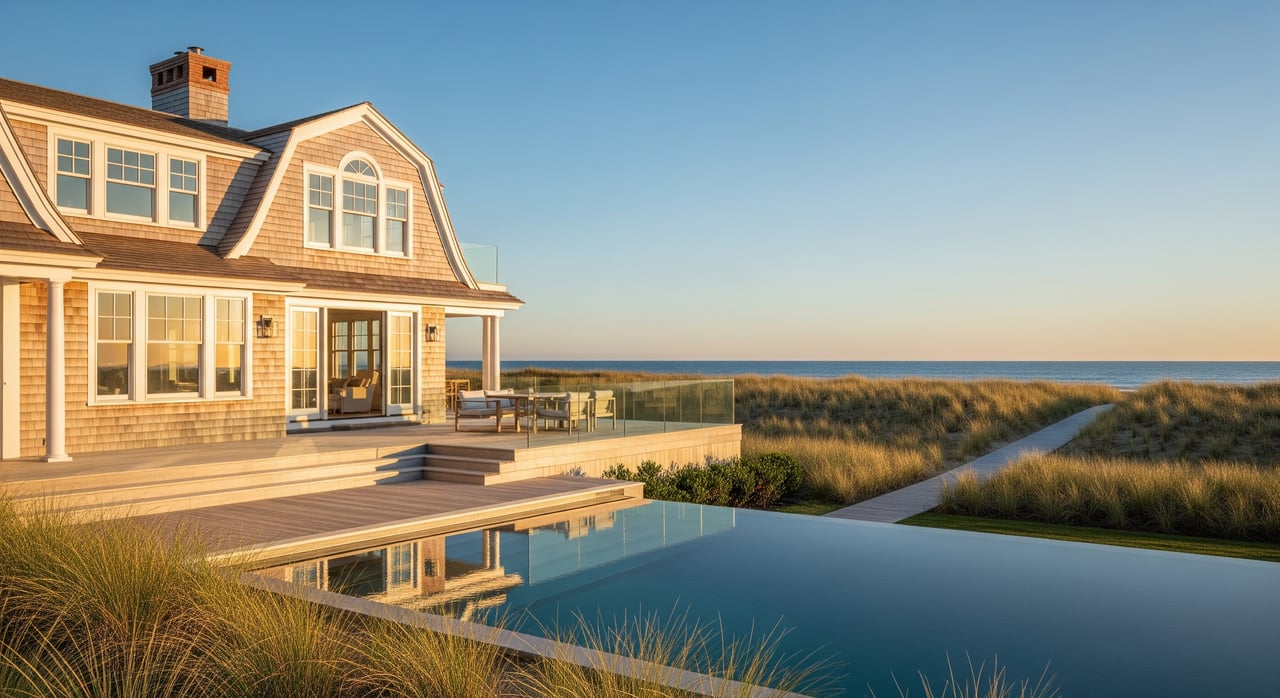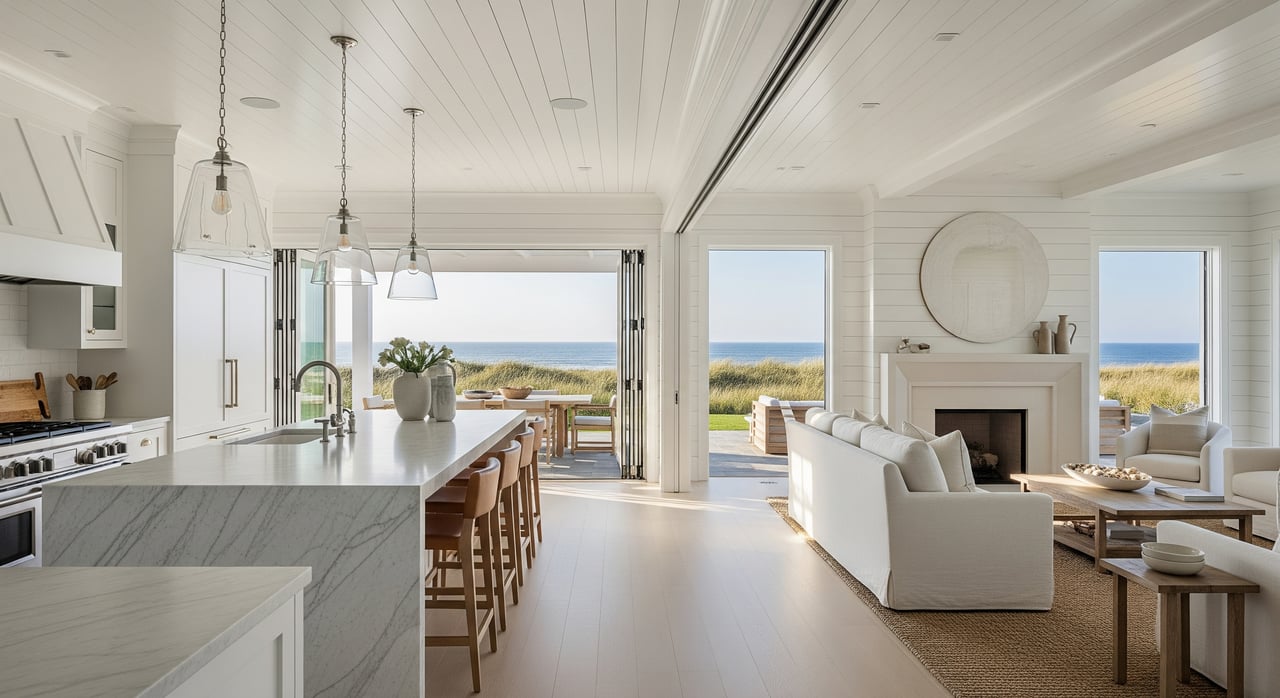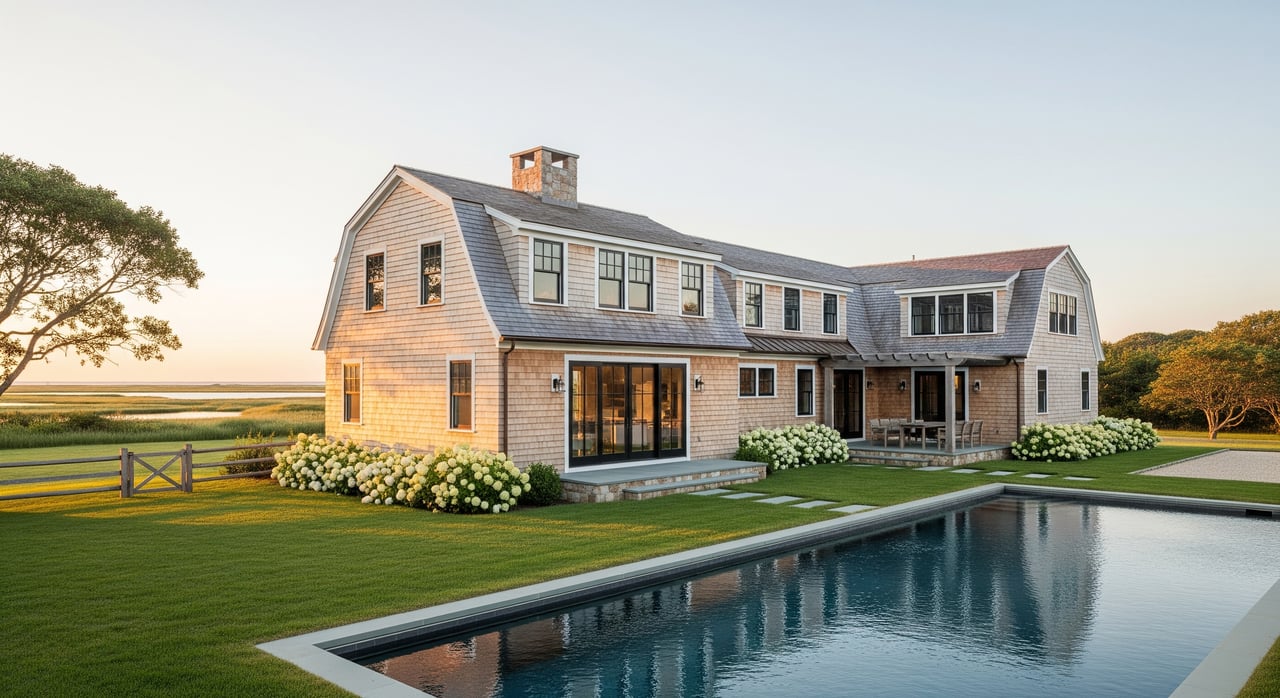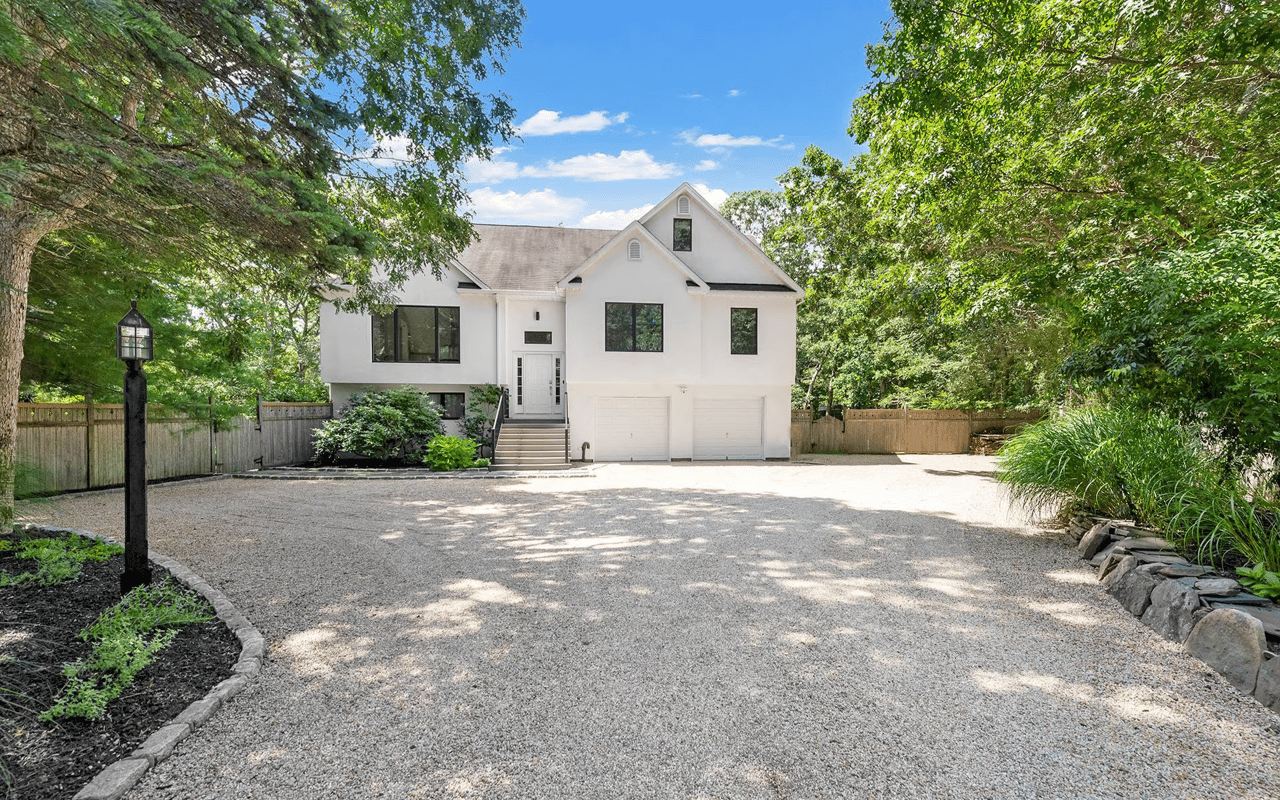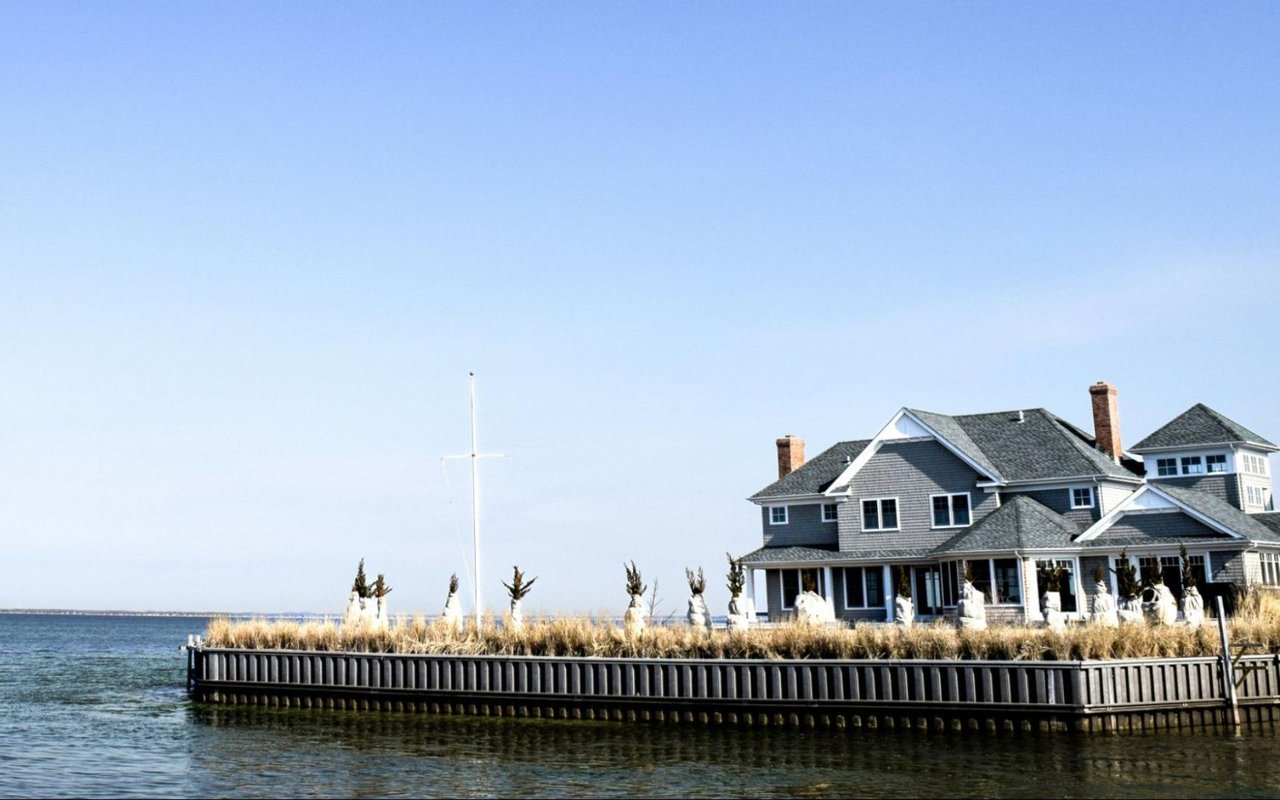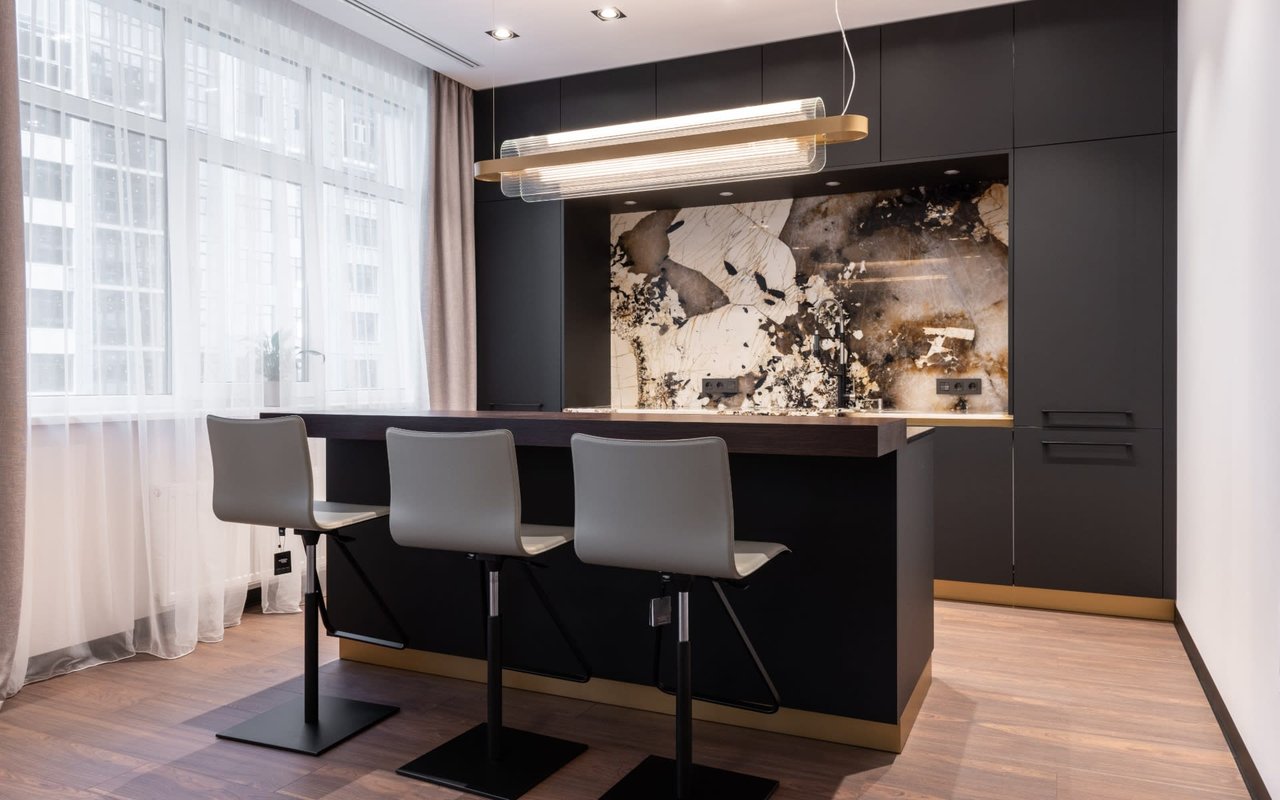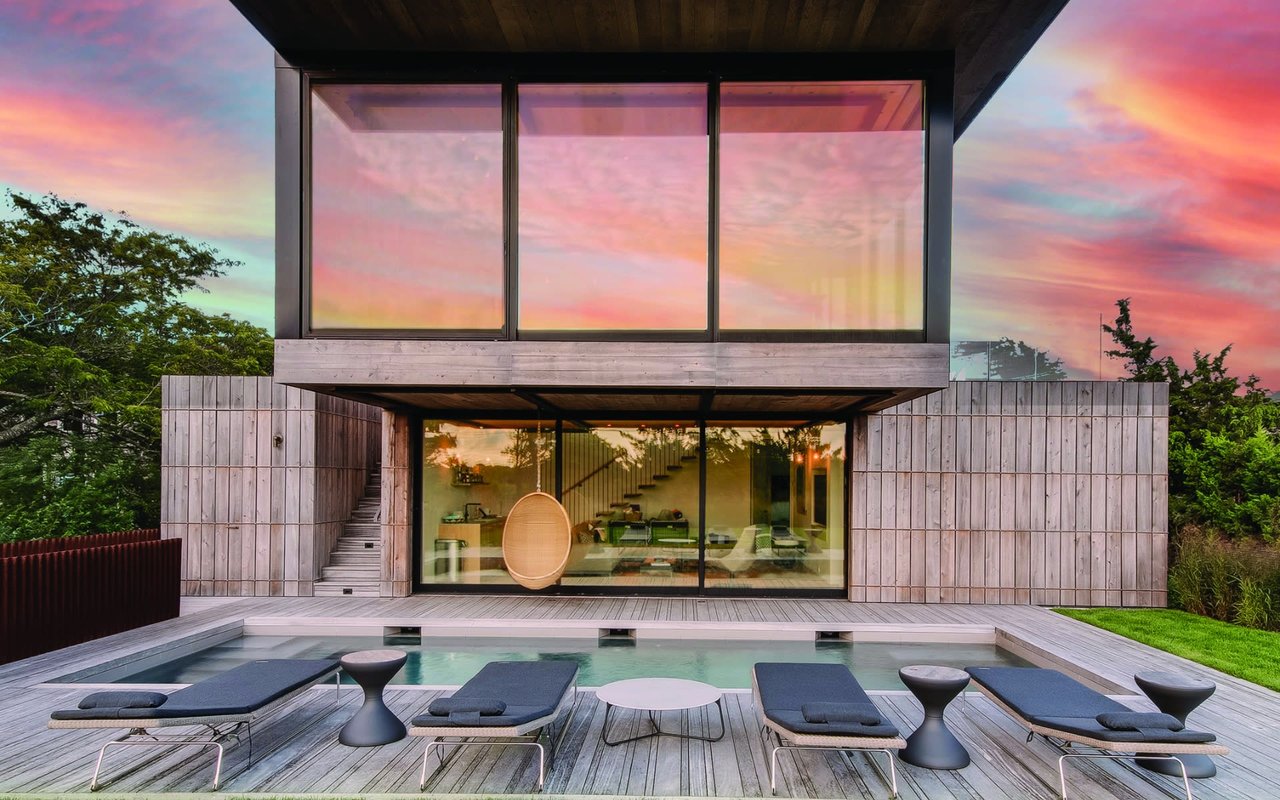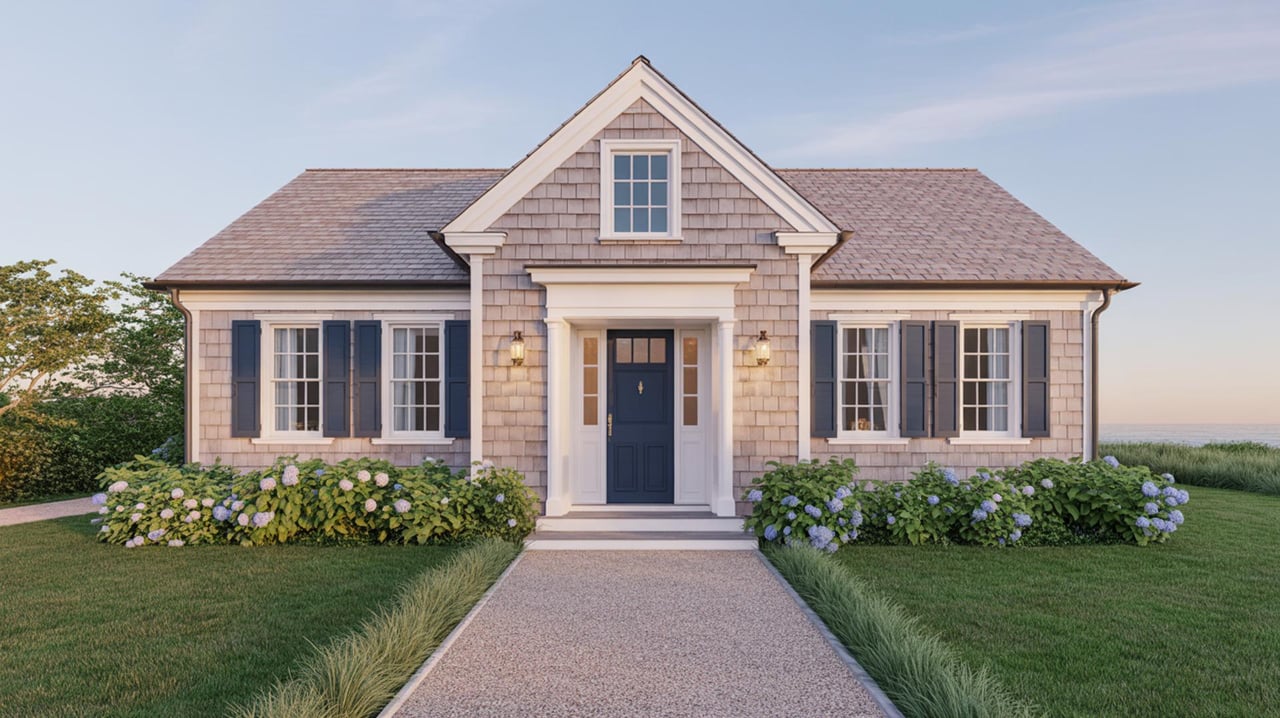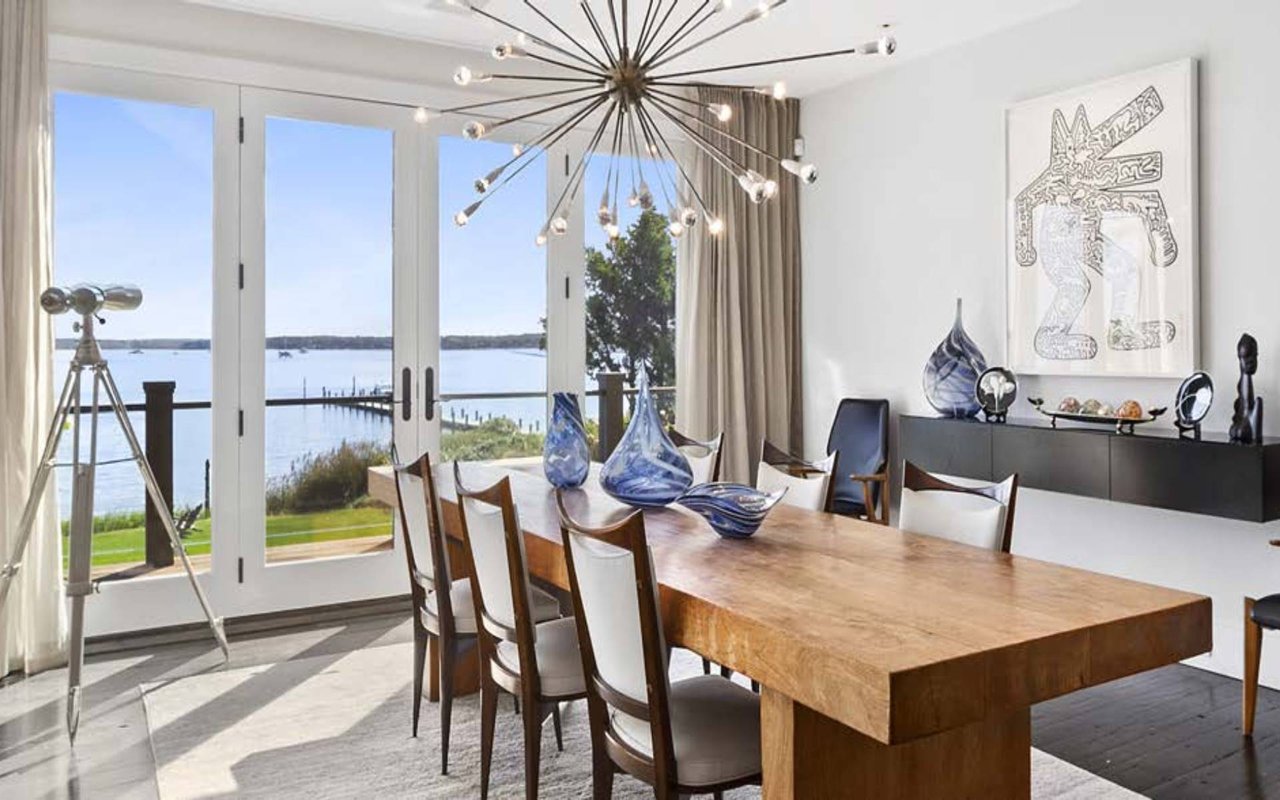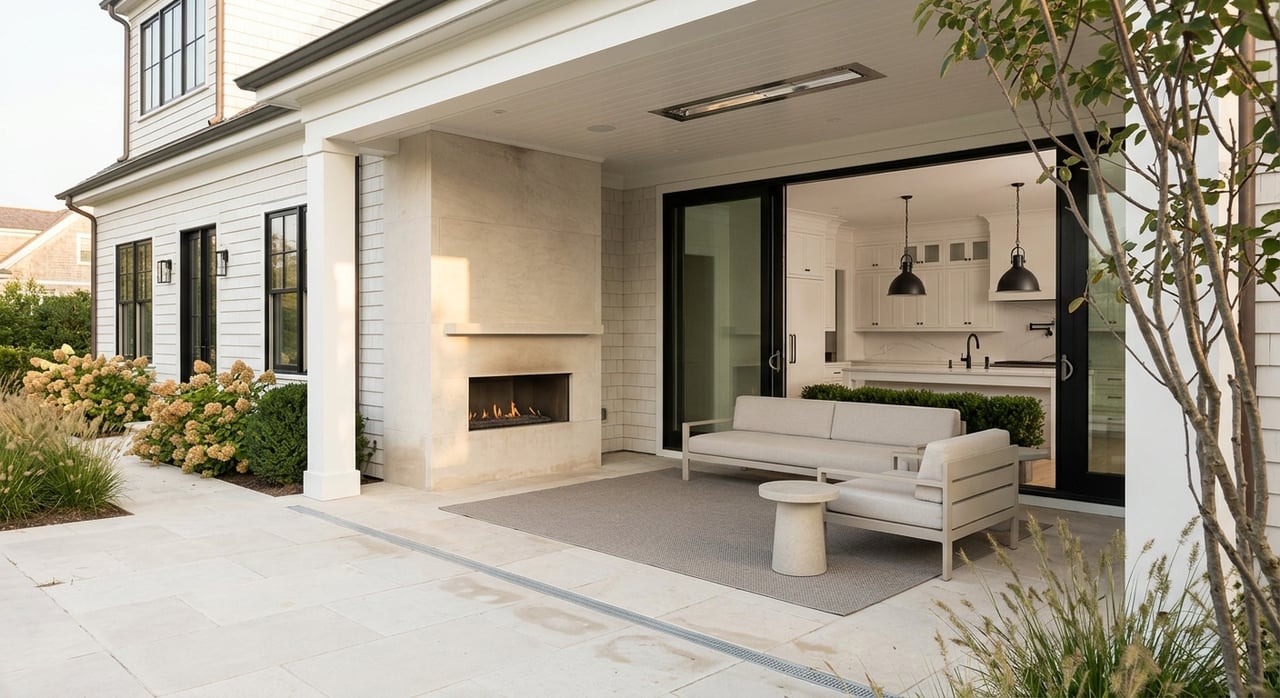
If you only think about Water Mill as a summer destination, you may miss what makes a home here work so well over the full year. In a hamlet where much of the housing is seasonally occupied, the smartest properties are the ones that handle July crowds, quiet fall weekends, and stretches of vacancy with equal ease. If you are buying, improving, or positioning a home in Water Mill, a dual-season strategy can help you protect comfort, usability, and long-term appeal. Let’s dive in.
Why dual-season planning matters in Water Mill
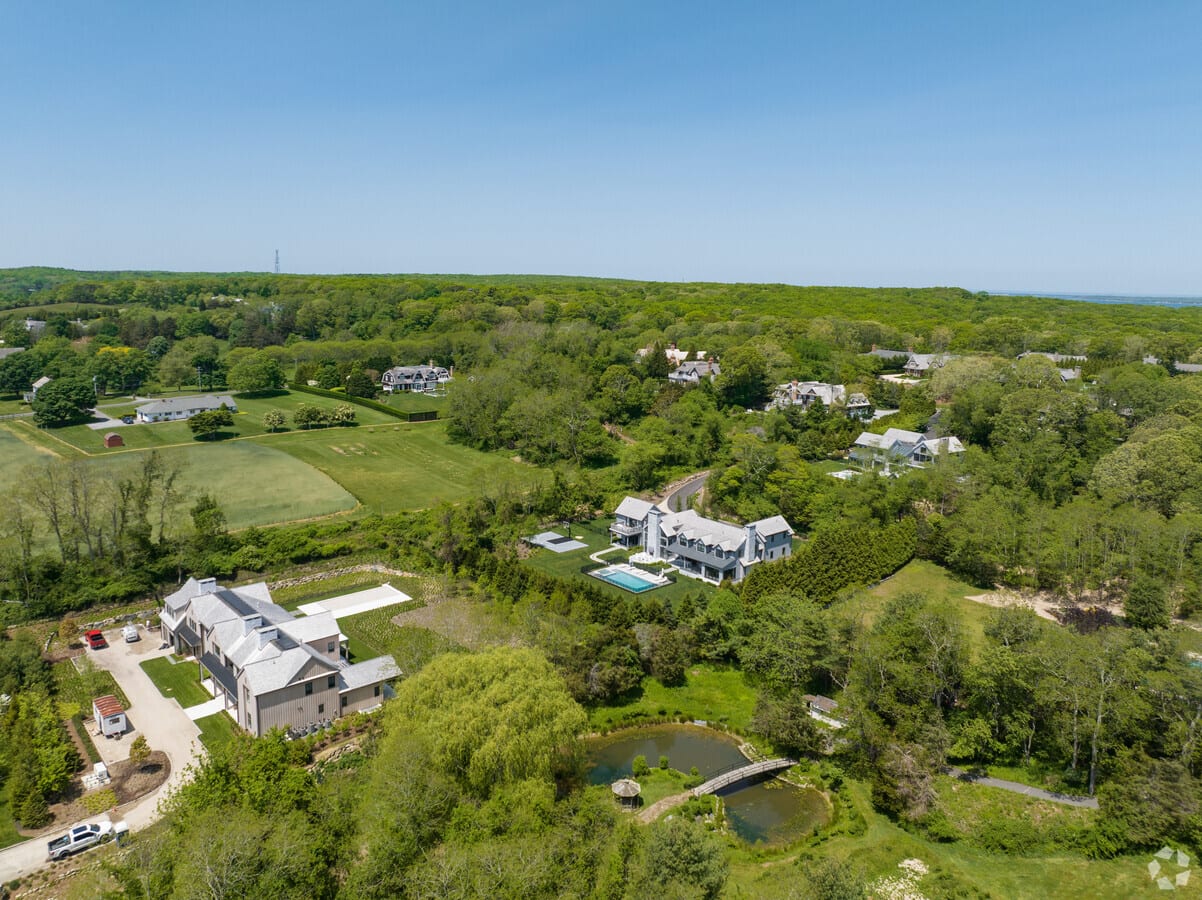
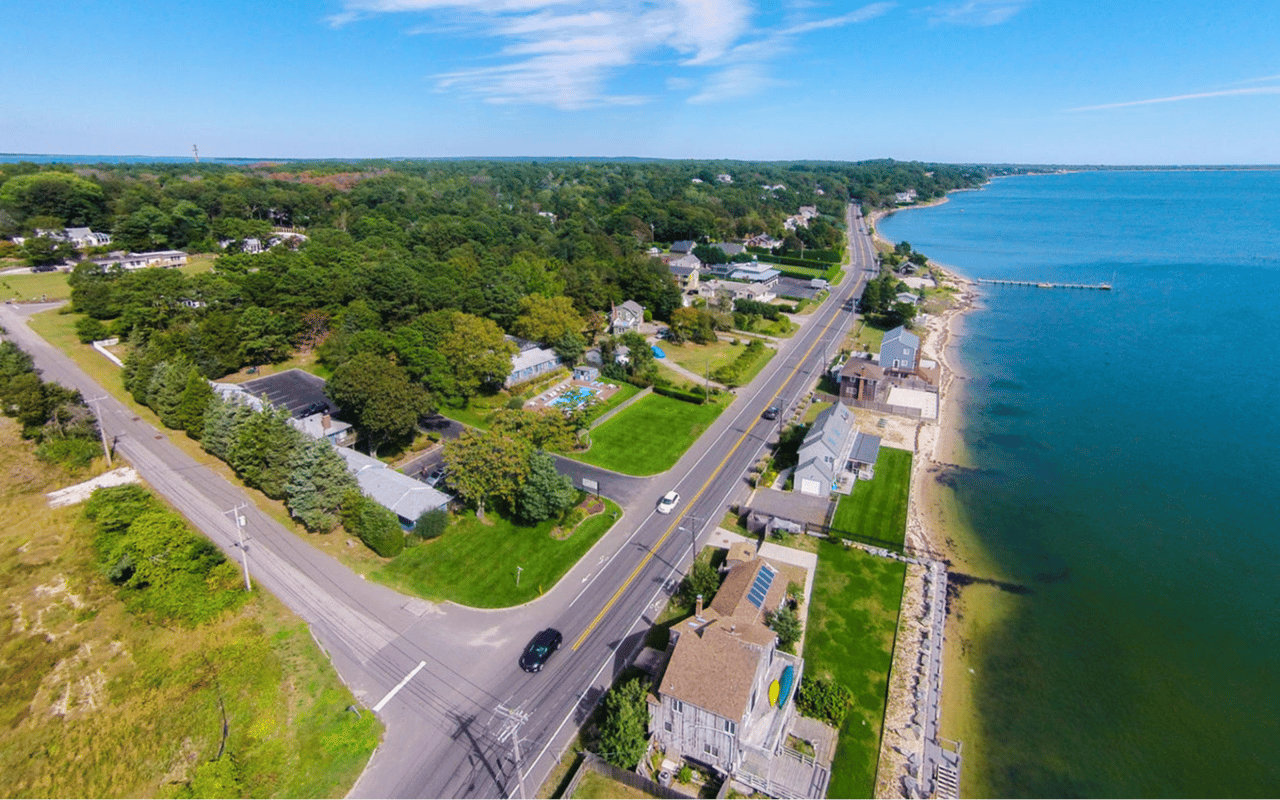
Water Mill has a very specific rhythm. The Town of Southampton describes it as primarily agricultural and residential, with large single-family homes on large lots and the highest amount of designated agricultural land of any hamlet in the Town. The same Town profile notes that 60.8% of housing is seasonally occupied and 94.7% of units are owner-occupied.
That matters because a home here often needs to do two jobs well. It should feel open, social, and beach-friendly in peak summer, but it should also feel comfortable, efficient, and manageable when you are using it more quietly in the shoulder season or leaving it vacant for periods of time.
For buyers and investors, that is not just a lifestyle issue. It is a planning issue that affects layout, storage, systems, upkeep, and rental readiness. In Water Mill, the homes that tend to feel easiest to live in are often the ones designed around flexibility rather than sheer size.
Water Mill access shapes home decisions
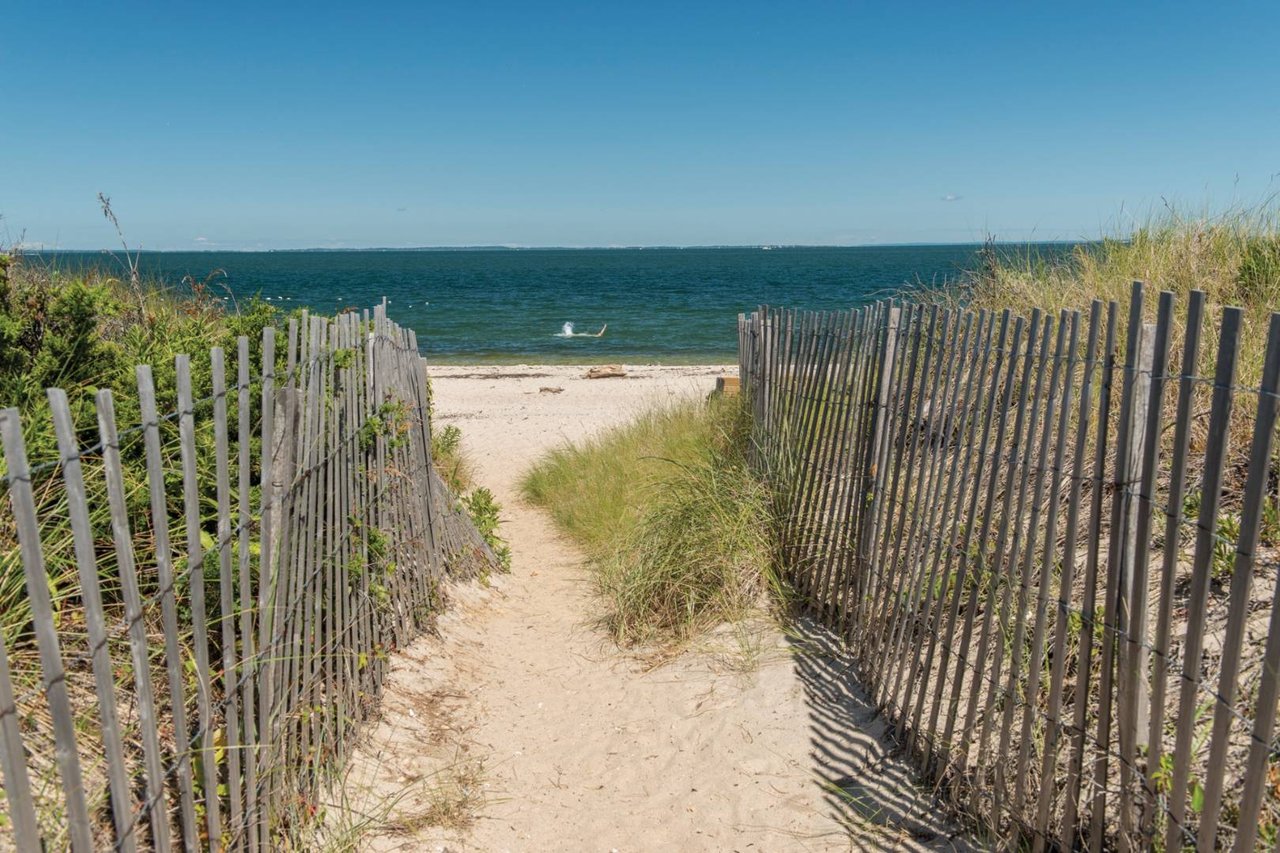
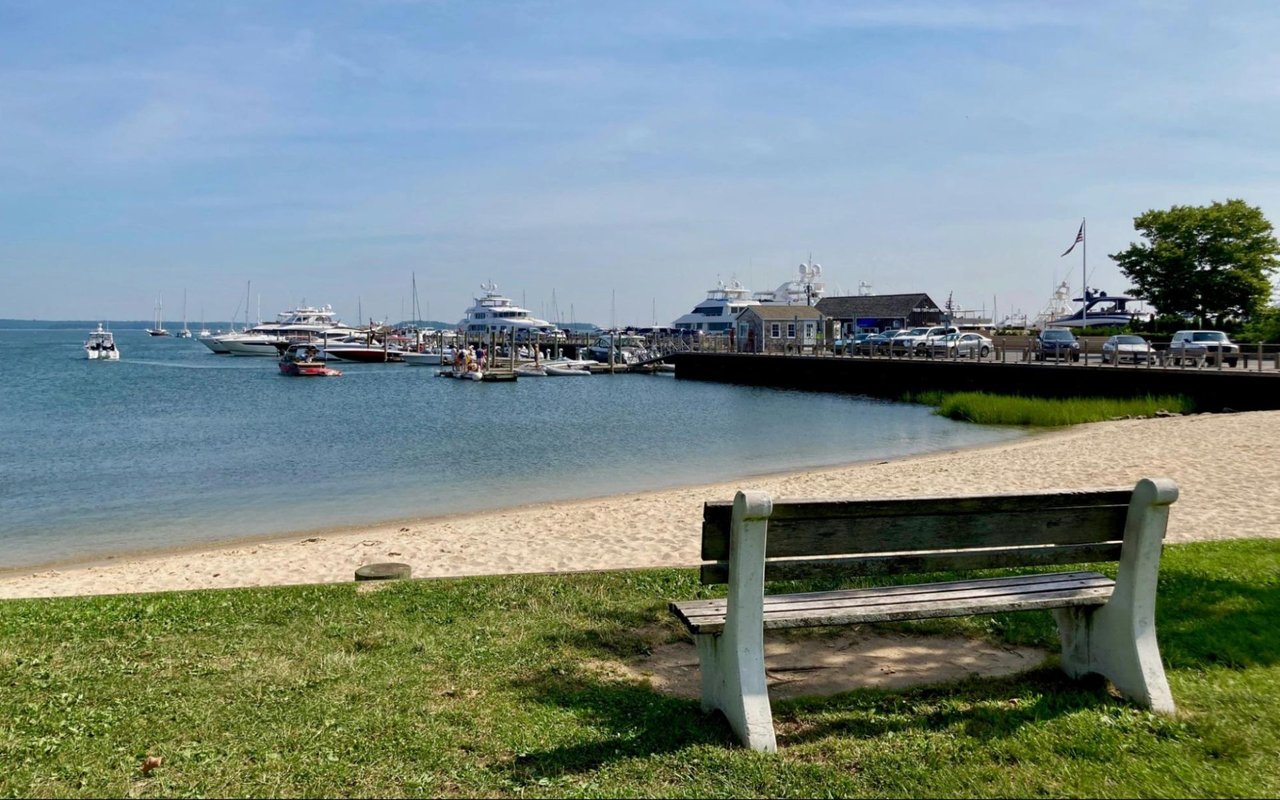
A dual-season strategy starts with how you actually use the area. Southampton Town identifies Flying Point Beach in Water Mill as a Town beach, and it also lists Mecox Beach in nearby Bridgehampton as part of the Town beach system. The Town explains that beach access is free, and permits are for parking only.
That practical detail has a real effect on home design and day-to-day living. If parking drives beach logistics, then storage for bikes, carts, boards, umbrellas, and sand gear becomes more important than many buyers expect. A house that makes loading in and out easy can feel far more useful than one with a larger but less functional living room.
Water Mill also benefits from its proximity to Southampton Village. The Village promotes about seven miles of oceanfront across eleven beaches, including Coopers Beach with bathrooms, fresh-water showers, chair and umbrella rentals, and a concession stand. Town beach permits do not cover Village beaches, so being close to both Town and Village options adds flexibility to how you use the area.
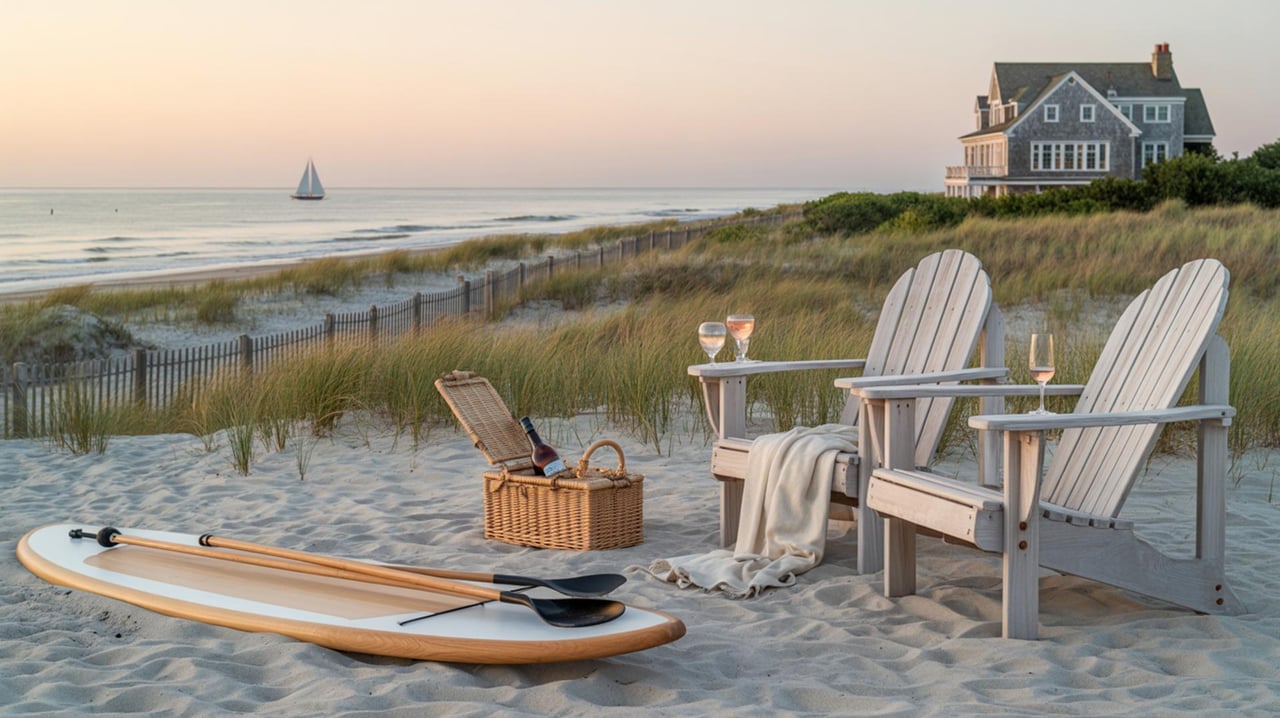
Then there is Mecox Bay. The Mecox Bay Conservancy describes it as a recreational resource for boating, paddle boarding, swimming, and kite surfing, and notes that it is a managed salt pond opened periodically through the Cut. That gives Water Mill a second seasonal layer: high-energy ocean time in peak summer and a calmer bay-centered rhythm outside the busiest weeks.
Choose a floor plan that adapts
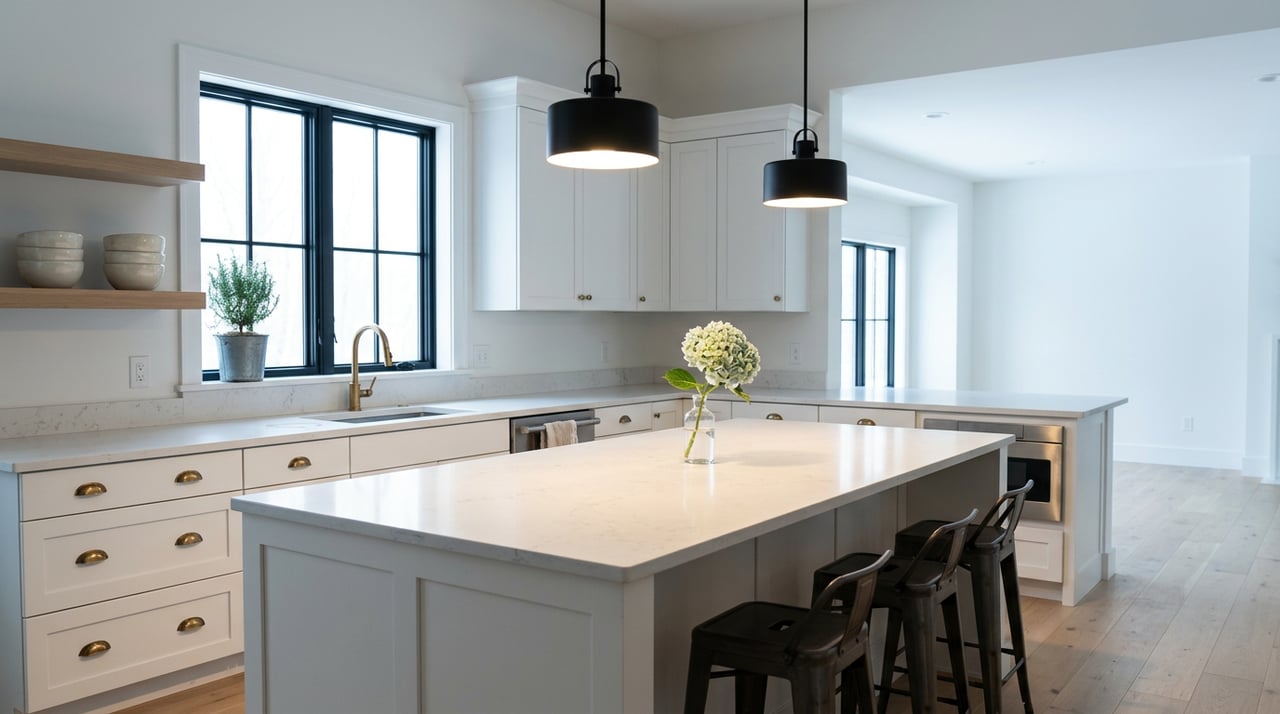
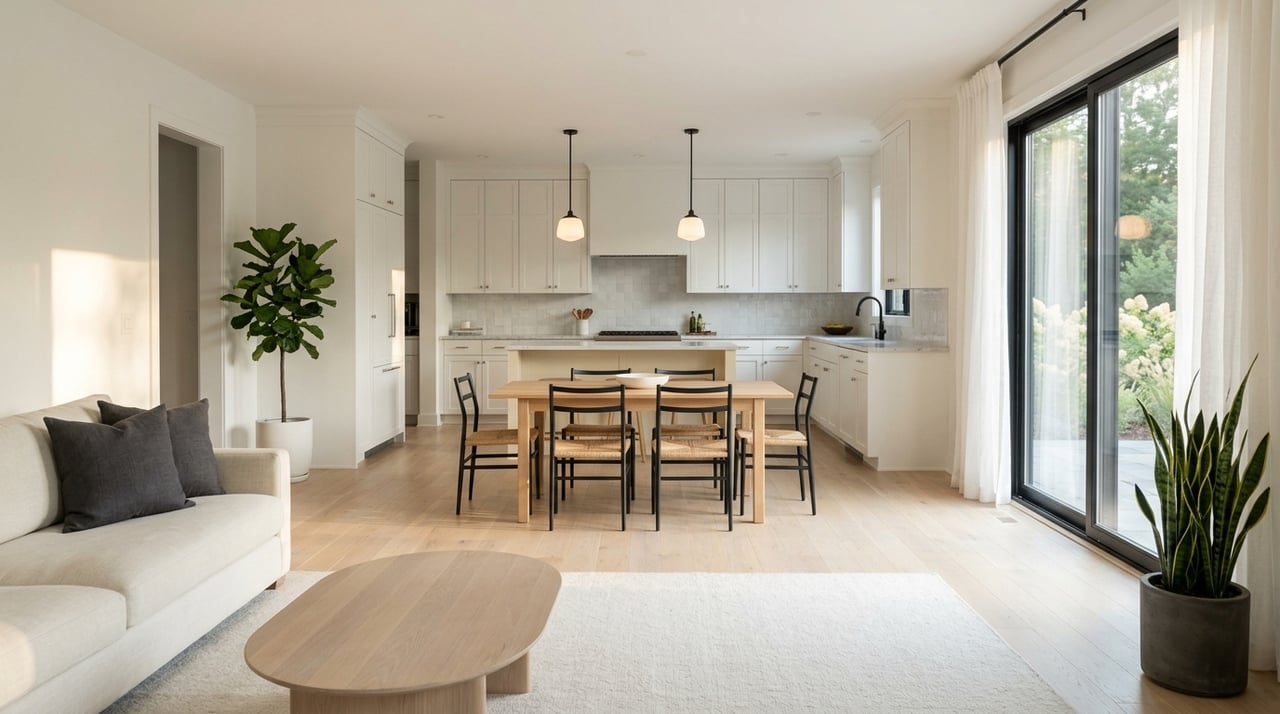
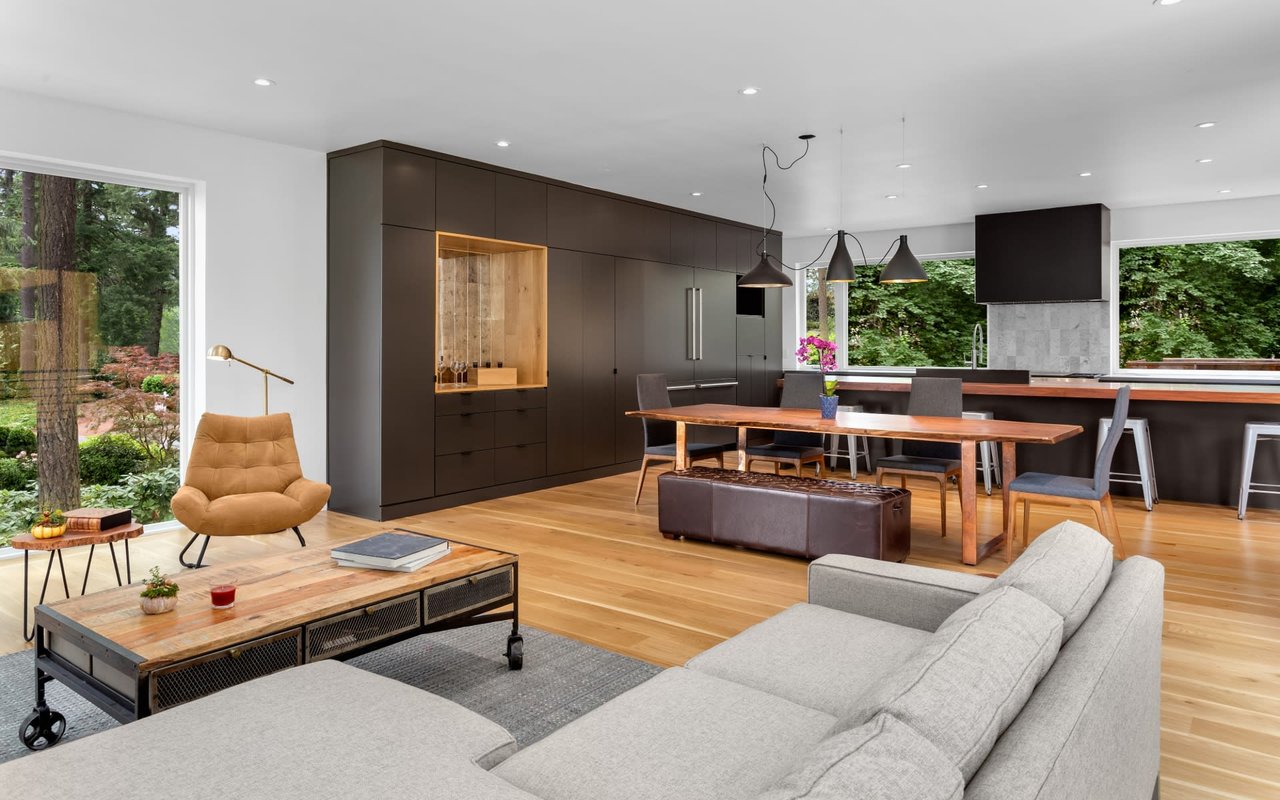
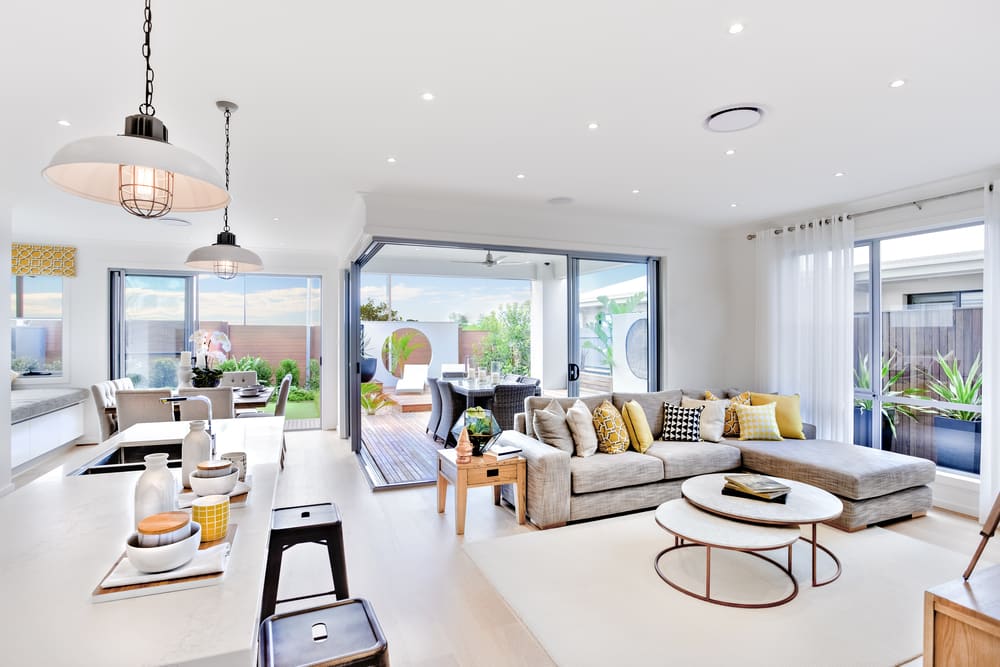
In Water Mill, a strong dual-season floor plan usually favors practical flexibility over formal separation. During summer, you may want a wide-open living and dining area that can handle guests with ease. In the off-season, you may prefer a smaller, quieter room that feels comfortable without needing to heat and use the entire house.
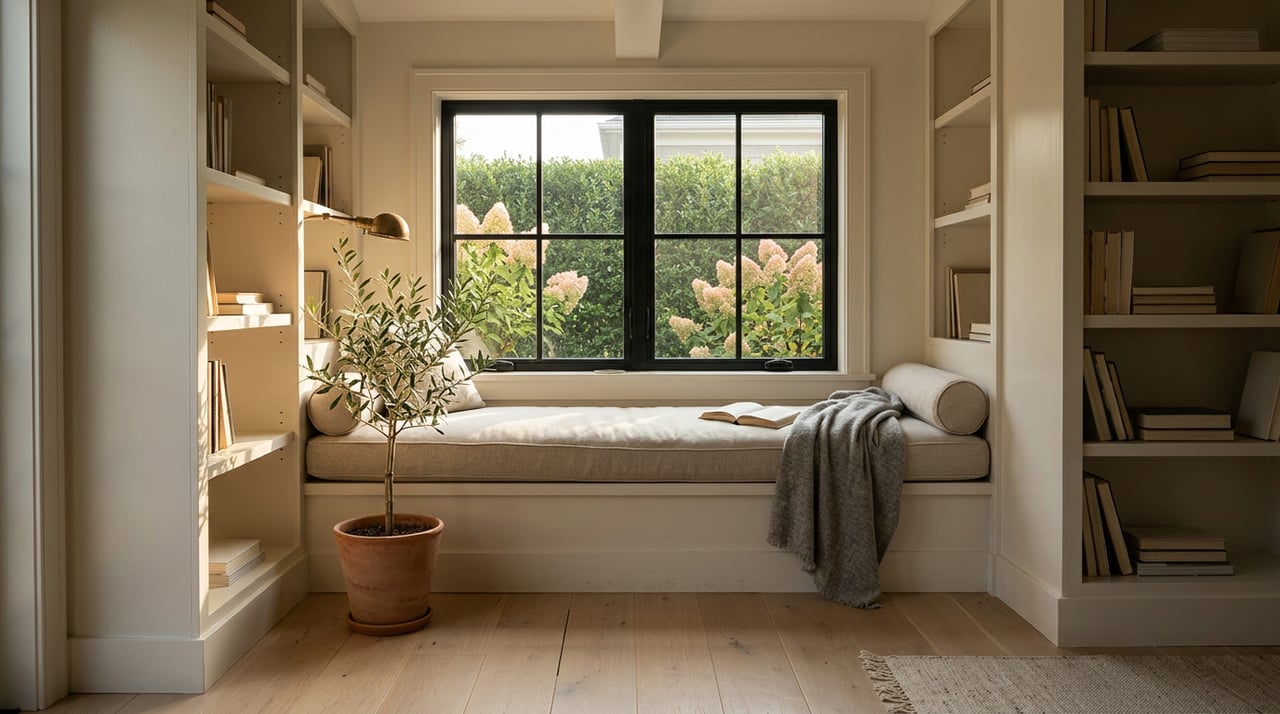
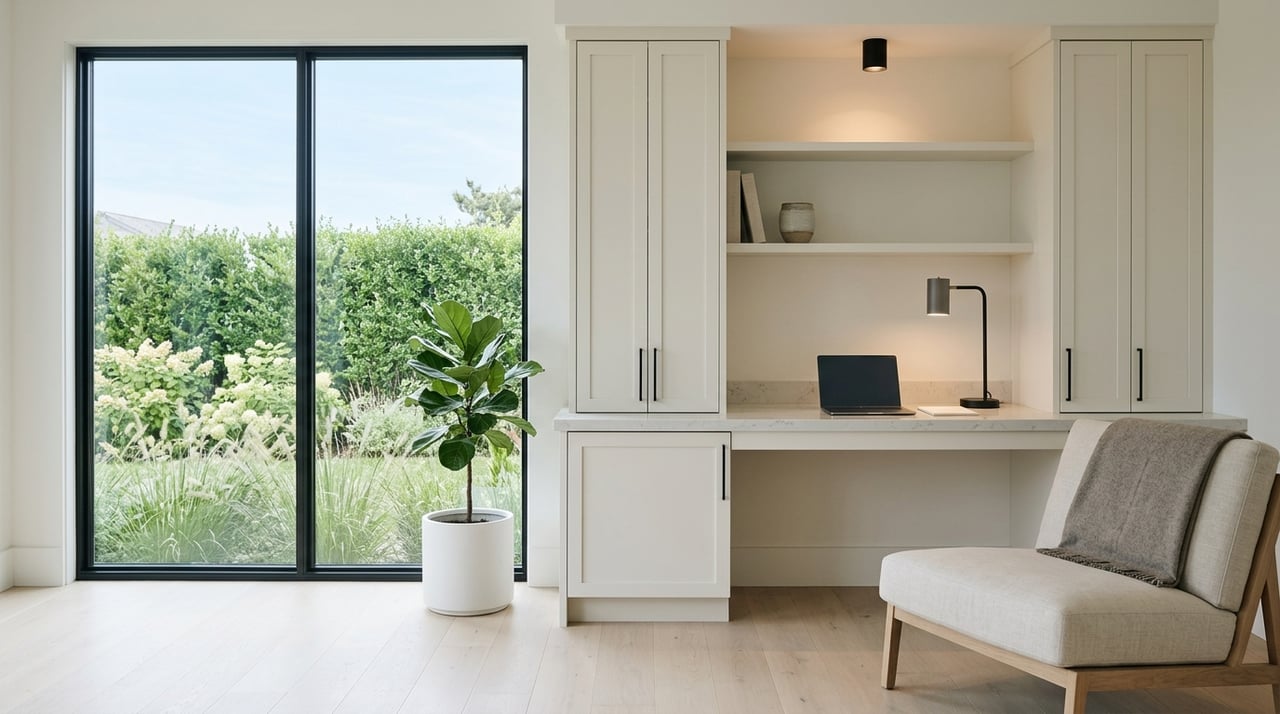
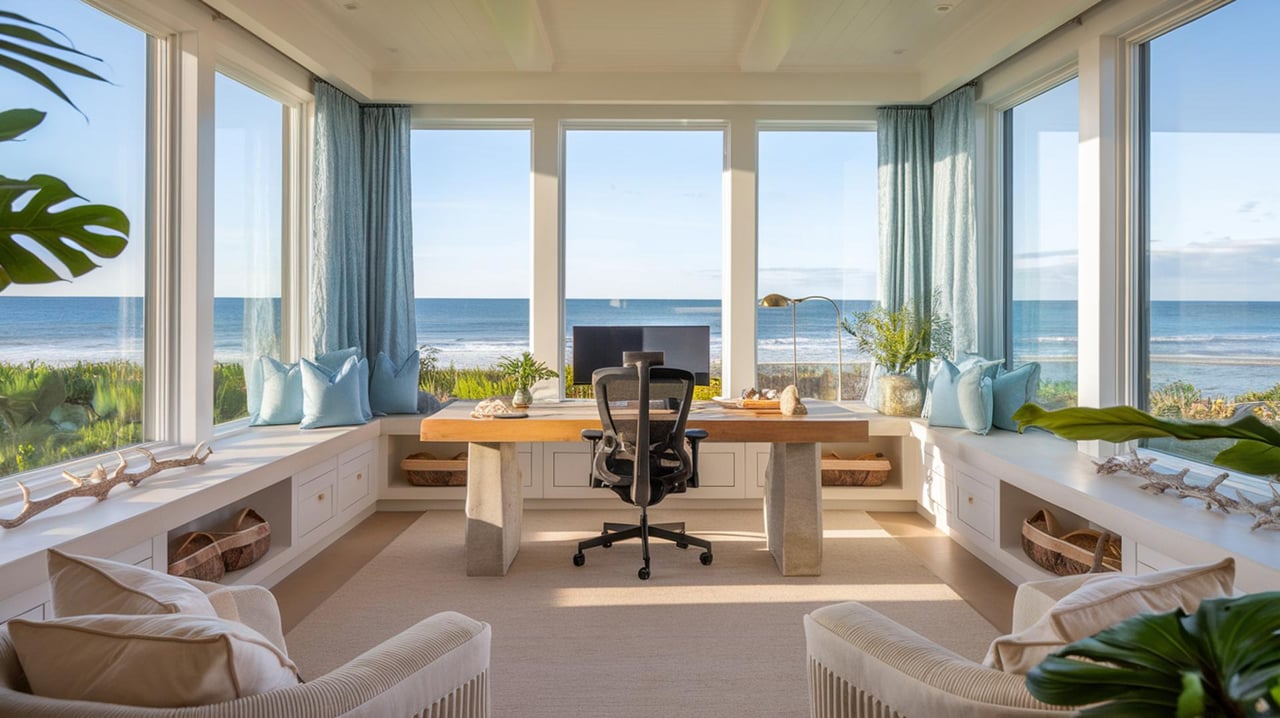
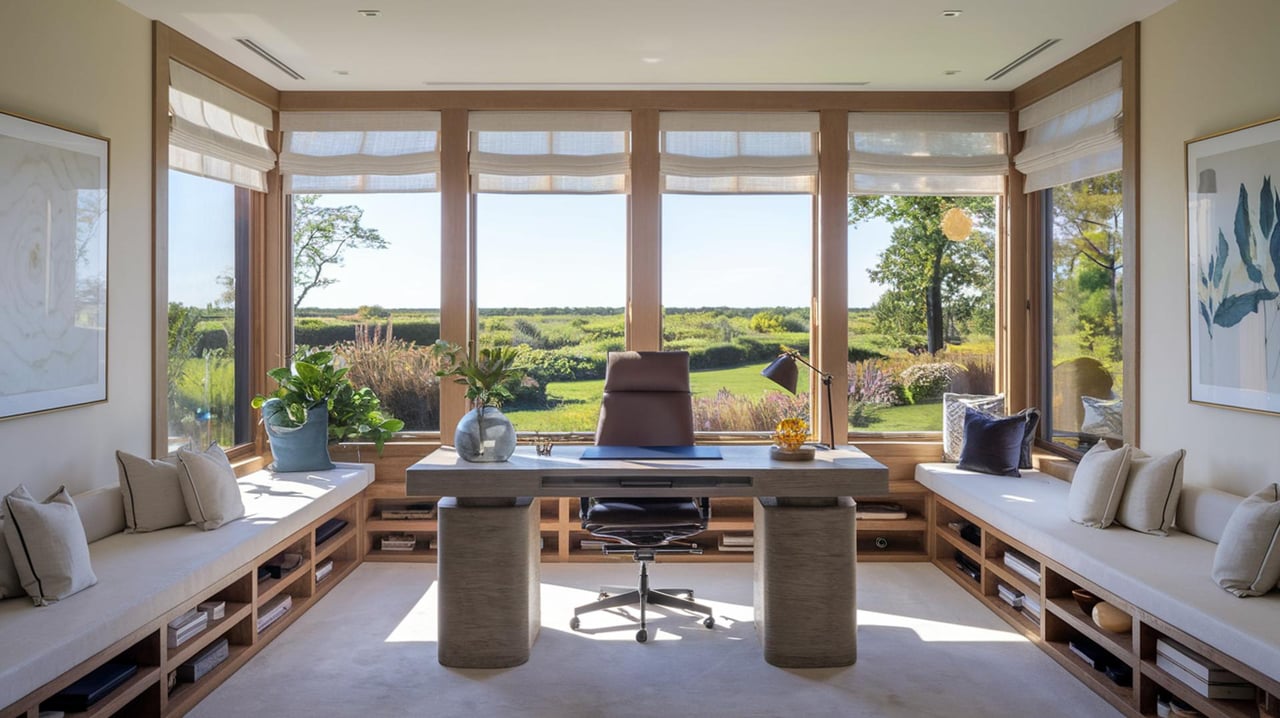
That is why one of the most useful setups includes an open main gathering space plus a separate den or office. The main room supports entertaining, while the secondary room becomes an everyday retreat for reading, working, or watching a movie on a rainy weekend.
A first-floor guest suite is another smart feature. It can support multi-generational visits in summer, make hosting easier, and reduce stair reliance for longer stays. In a large home, it also helps the property feel more usable when fewer people are in residence.
Bathroom count matters too, but balance matters just as much. Enough bathrooms can keep the home functioning smoothly during busy periods, yet the overall layout should not feel oversized or awkward when only one household is there. In Water Mill, ease of use often adds more value than extra formality.
Rooms that earn their keep
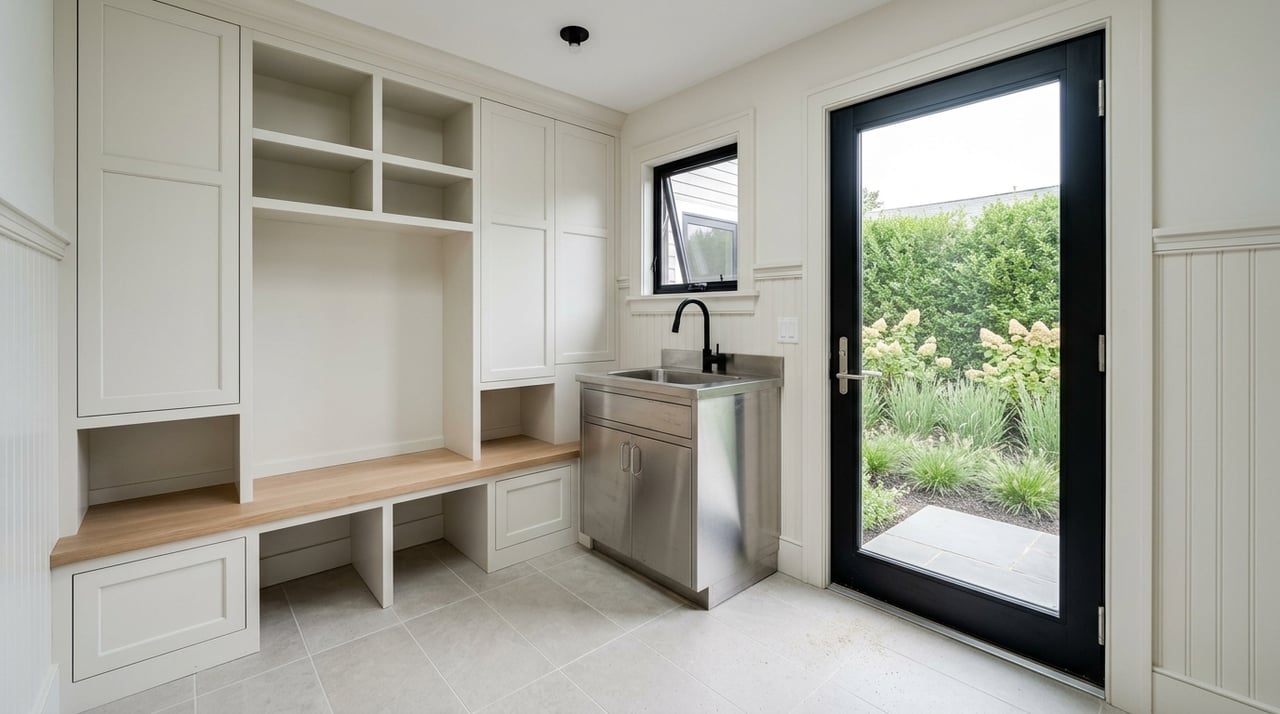
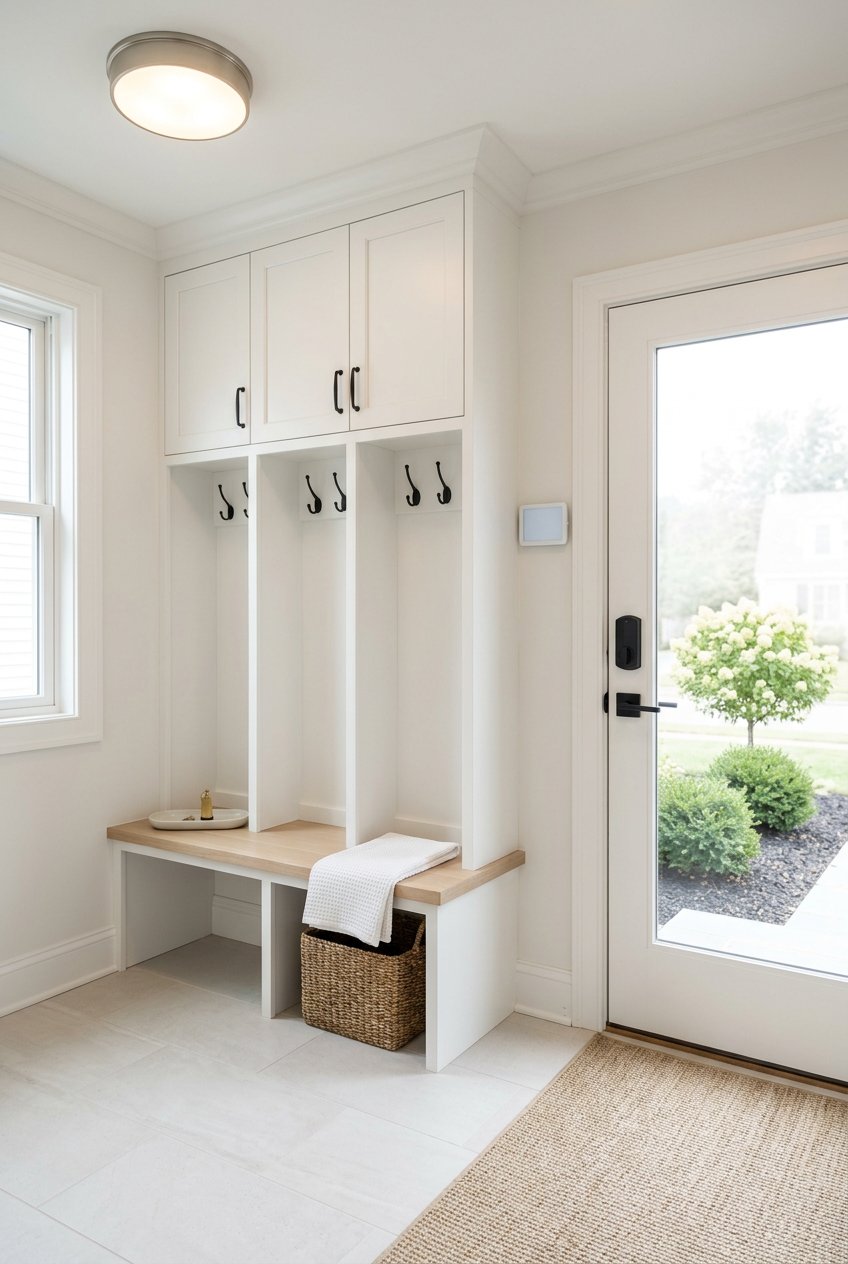
Some of the most important spaces are not the dramatic ones. A mudroom, dedicated laundry area, enclosed beach-gear storage, and a garage or service entry can reduce everyday friction in a major way.
These spaces are especially helpful in Water Mill because the area is auto-dependent and beach access is often tied to parking logistics. Add in large yards, vegetation, sand, and salt, and the best homes are usually the ones that let you move easily between outdoors and indoors without dragging clutter through the main living spaces.
Generous closet space also matters more than it may on a quick showing. A house that can neatly store seasonal items, extra linens, bikes, and off-season furnishings will usually feel calmer and easier to manage year-round.
Prioritize systems that protect the house
In a place like Water Mill, your systems package should support comfort, humidity control, and periods when the home may be vacant. That means HVAC decisions are not just about comfort. They are also about protecting the property.
The U.S. Department of Energy notes that cold-climate heat pumps provide both heating and cooling and are designed to perform more efficiently in low outdoor temperatures. For a home that needs to function in both summer and cooler months, that kind of all-season efficiency can be especially useful.
Humidity control is just as important. The EPA states that moisture control is the key to mold control and that indoor relative humidity should be kept below 60% if possible, ideally between 30% and 50%. In a coastal setting, that makes dehumidification and remote monitoring practical priorities, not minor upgrades.
ENERGY STAR also notes that certified dehumidifiers use 20% less energy than similar conventional units and that smart thermostats allow remote control and away-mode scheduling. If you spend only part of the year in Water Mill, those features can help you maintain stable conditions without constant on-site oversight.
Backup power needs a serious plan
If you are considering backup power, treat it as part of a broader house-protection plan. FEMA advises that portable generators must be used outdoors, at least 20 feet from windows, doors, and attached garages. FEMA also warns that a generator should never be connected directly to a home’s electrical system without proper transfer equipment.
In a coastal market, that goes beyond convenience. Owners who are away during storms may be thinking about alarms, freeze protection, refrigeration, and the general stability of the house. Reliable planning around power can support the property when you are not there to respond in person.
Use materials that reduce maintenance
A dual-season home should be easy to reset after a beach day and easy to close up when you leave. In practice, that often means choosing quick-drying, wipeable, and corrosion-resistant finishes instead of delicate materials that absorb moisture or show wear quickly.
The EPA’s guidance on moisture makes this logic straightforward. Damp materials and condensation can contribute to mold issues, so surfaces and furnishings that dry quickly are usually the safer choice in a house exposed to sand, salt air, and changing occupancy patterns.
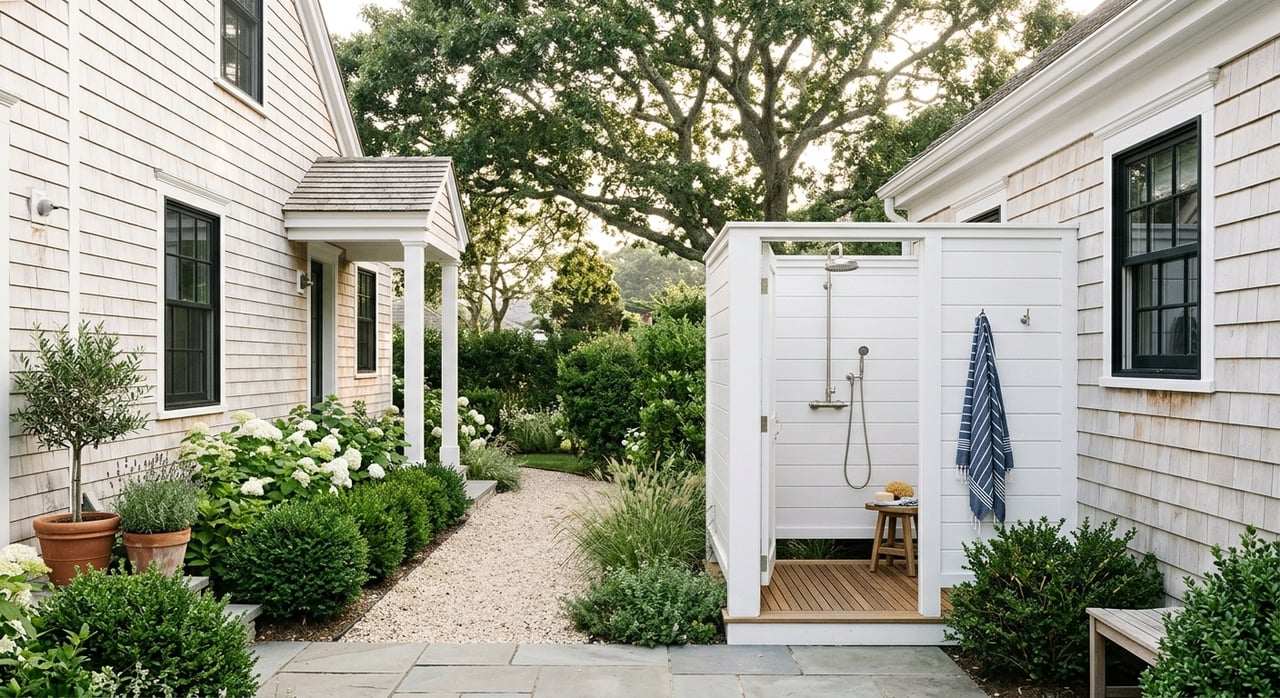
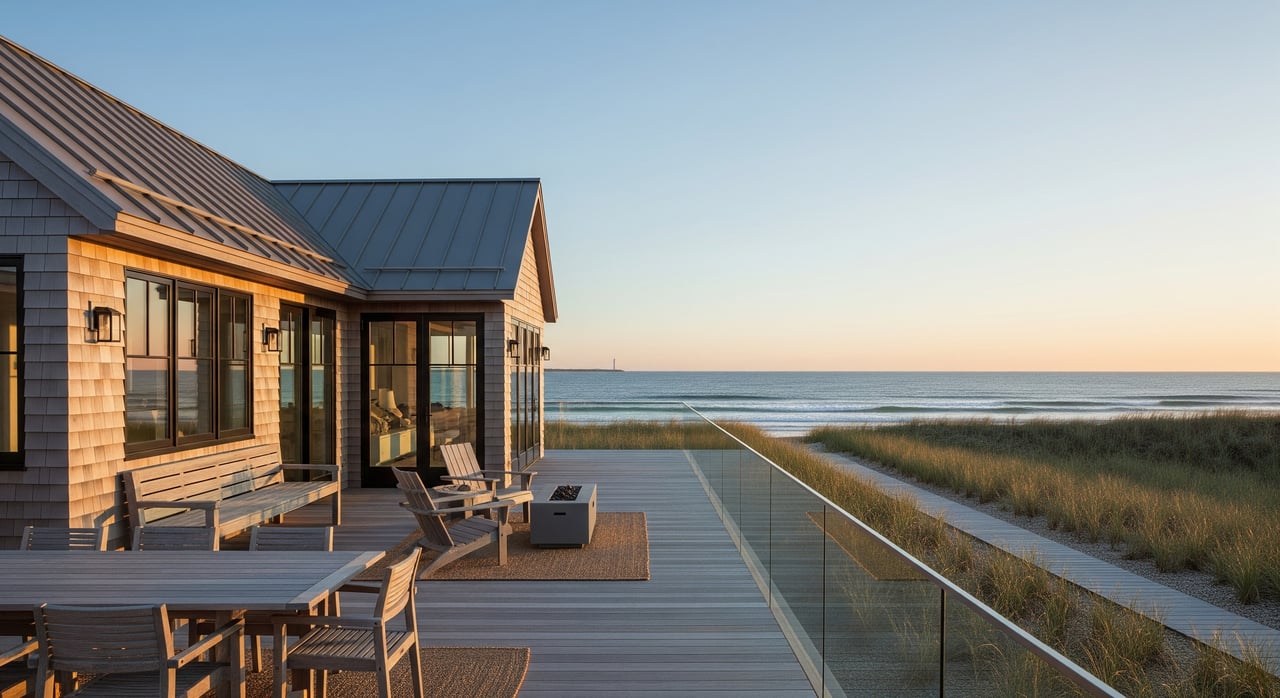
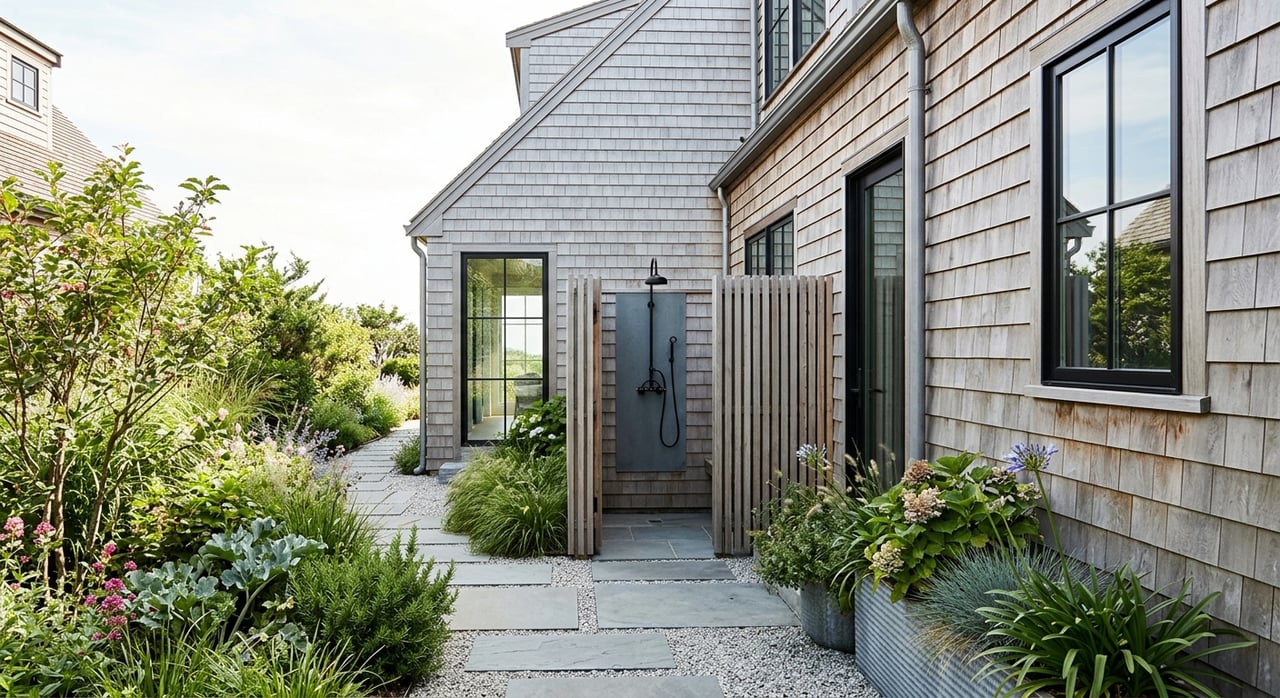
That is why practical features often make a bigger difference than expected. Outdoor showers, hose stations, removable rugs, and enclosed storage for beach equipment can simplify cleanup and preserve the interior. These are not glamorous upgrades, but they can make the home much easier to live with in both high and low season.
Rental readiness starts with compliance
If rental income is part of your strategy, the first question is not furniture or marketing. It is compliance. The Town of Southampton states that any home rented for any period of time requires a rental permit.
The Town also says the current minimum stay under Town Code is 14 days. Just as important, advertising, listing, or showing a house for rent without a permit can lead to violations and even a two-year loss of rental ability.
For investors and second-home owners, that means rental planning should start early. Ownership structure, furnishing choices, timing, and calendar strategy should be treated as one connected plan rather than separate decisions made later.
Ownership changes can affect permits
The Town states that rental permits are non-transferable. It also notes that if title moves into an LLC, trust, or estate, a new permit is required under the new deeded owner.
That can be a meaningful operational issue for buyers who are thinking ahead about asset structure or estate planning. It is one more reason to approach Water Mill ownership with a coordinated strategy rather than assuming you can solve rental logistics after closing.
What long-term value often looks like
There is no single formula for long-term value, but Water Mill’s local conditions point in a clear direction. The combination of large-lot residential patterns, high seasonal occupancy, strong owner occupancy, and access to both ocean beaches and Mecox Bay suggests that flexibility matters.
Homes that handle full summer occupancy without feeling burdensome in October or November may have an edge in marketability over time. The same is often true for houses with better storage, stronger humidity control, and more thoughtful transitions between indoor and outdoor living.
In other words, the homes that perform well here are often the ones that feel easy. They support the peak-season lifestyle people want, but they also respect the practical reality of ownership in a coastal, seasonal market.
If you are evaluating a purchase, preparing a property for sale, or thinking about rental use, it helps to look beyond aesthetics alone. In Water Mill, the best strategy is usually the one that treats the home as both a lifestyle asset and a property that needs to function smoothly over time.
If you want help evaluating how a Water Mill home fits your lifestyle goals, rental plans, or long-term ownership strategy, Michael Petersohn can help you think through the details with a local, data-driven perspective.
FAQs
What floor plan works best for a dual-season home in Water Mill?
- A flexible layout usually works best, with an open main living area for summer entertaining, a separate den or office for quieter off-season use, a first-floor guest suite, and enough storage and bathrooms to support both busy and low-occupancy periods.
What systems should you prioritize in a Water Mill second home?
- Heating and cooling, dehumidification, smart thermostat control, and remote monitoring should be high priorities because Water Mill’s coastal setting and seasonal vacancy patterns make comfort and moisture control especially important.
What rental permit rules apply to Water Mill homes in Southampton Town?
- Southampton Town says any home rented for any period needs a rental permit, the current minimum stay is 14 days, and advertising or showing a rental without a permit can lead to violations and possible loss of rental ability.
How do Water Mill Town beaches differ from Southampton Village beaches?
- Southampton Town says Town beach permits are for parking only and do not cover Village beaches, while nearby Southampton Village offers its own beach access and amenities, so the difference is often less about the shoreline itself and more about parking, permits, and day-to-day logistics.
Why is Mecox Bay important in a Water Mill home strategy?
- Mecox Bay adds another layer of seasonal use because it supports activities like boating, paddle boarding, swimming, and kite surfing, which can make a Water Mill home feel useful beyond peak ocean-beach season.